Please change your selection or click Deselect.
Castle Nymphenburg - Johannissaal
W.A.Mozart: Sonate Nr. 3 in B-Dur, KV 281,
G.F.Händel: Chaconne
F. Chopin: Nocturne Op.48/2, Op.55/1
R.Schumann: Aus Fantasiestücke Op. 12
Residence-Solist: Rezi Marshania - piono
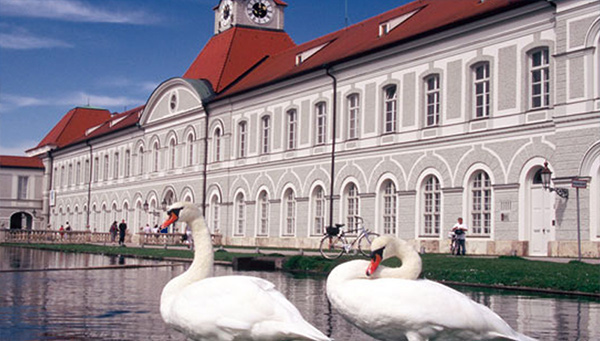
This concert series serves as a tribute to Mozart, who gave a concert with his sister Nannerl in Nymphenburg Palace with Elector Maximilian III when he was seven years old and thus went down in history.
This program brings together works from different eras of piano literature, creating a musical journey from the Baroque to the Romantic period.
The Piano Sonata No. 3 in B-flat major by Wolfgang Amadeus Mozart reflects the elegance and clarity of the Classical style. Its graceful melodies and lively character combine refinement with brilliant pianistic writing.
The Chaconne by George Frideric Handel presents a striking example of the Baroque variation form. Built on a repeating bass pattern, the music unfolds through a series of imaginative and increasingly elaborate transformations.
The Nocturnes by Frédéric Chopin belong to the most poetic works of the Romantic piano repertoire. With their singing melodic lines and rich harmonies, they create intimate soundscapes full of expressive depth.
Selections from Fantasiestücke, Op. 12 by Robert Schumann conclude the program. These character pieces reveal Schumann’s vivid imagination and emotional intensity, capturing the spirit of Romantic musical storytelling. ?
The Old Court Chapel
Variable program
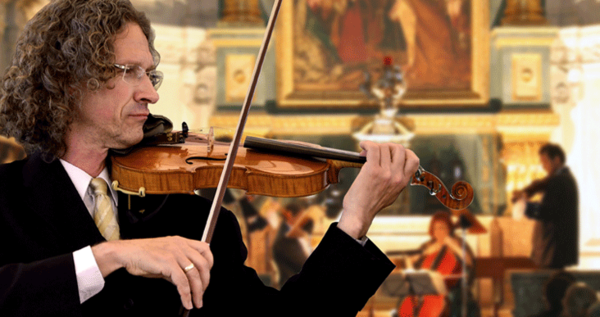
Every Saturday you can expect a special cultural hallmark in the Munich Residence troughout the year. The Residence Soloists are performing in the Court Chapel (Hofkapelle) The historical atmosphere of the court chapel in which also Mozart was performing concerts lets you get in touch with the music of old times. You will find weekly changing performances with masterpieces ranging from Bach, Vivaldi, Haydn and Mozart.
Please notice: In summertimes the old court chapel is cool and in wintertimes it can be cold! please wear warm clothes.
Max-Joseph hall of the Munich Residence
Ludwig van Beethoven: Symphony No. 6 – Allegro “Awakening of cheerful feelings upon arrival in the countryside”; Andante – “Scene by the brook”
Felix Mendelssohn: Symphony No. 4 – Allegro
Felix Mendelssohn: Violin Concerto in E minor
Marcelino Rojas – Violin & Residenz-Solisten
In the warm candlelight of the Max-Joseph Hall, the music awakens to spring. Marcelino Rojas, a standout violinist, leads the Resident Soloists through an evening filled with liveliness, poetic nuances, and orchestral brilliance. Beethoven’s Symphony No. 6 in F major, Op. 68, “Pastoral,” offers a sonic landscape of cheerfulness and nature-poetry. The Allegro invites the ear to travel to the first spring morning in the countryside, the soft rustle of leaves coming alive in the orchestral textures. The Andante, “Scene by the Brook,” exudes quiet beauty with birdsong, babbling streams, and the footsteps of hikers brought to life by the music, creating a poetic image that fills the room and draws the listener into an intimate nature experience.
Mendelssohn’s Symphony No. 4 in A major, Op. 90, “Italian,” brings the sun of Italy into the Max-Joseph Hall with its Allegro. Bright harmonies, dancing rhythms, and sparkling melodic ideas convey the lightness and joy of the Mediterranean summer.
The Violin Concerto in E minor by Mendelssohn provides the evening’s climax. Marcelino Rojas interprets with radiant virtuosity, refined phrasing, and emotional depth, while the Resident Soloists weave a delicate yet powerful sonic bed. From the moving opening, through the lyrical central passages, to the virtuosic final stops, the listening experience is intense, combining technical brilliance with inner subtleties.
This master concert by candlelight unites virtuosity, poetic elegance, and the ceremonial atmosphere of a historic concert hall into a total work of art.
Castle Nymphenburg - Johannissaal
W.A. Mozart: Fantasy C-Moll, KV 386
F. Chopin: 2. Ballade und Polonaise-Fantasy
F. Mendelssohn-Bartholdy: Fantasy, Op. 28.
Resident Soloist: Fuyin Liu – piano
This concert series serves as a tribute to Mozart, who gave a concert with his sister Nannerl in Nymphenburg Palace with Elector Maximilian III when he was seven years old and thus went down in history.
This program brings together three works in which the idea of fantasy—expressing freedom, imagination, and poetic storytelling—plays a central role.
The Fantasia in C minor, K. 396 by Wolfgang Amadeus Mozart reveals an especially expressive side of the composer. Its improvisatory character and shifting moods create a dramatic yet sensitive musical landscape.
The Ballade No. 2 and the Polonaise-Fantaisie by Frédéric Chopin present two works of profound poetic intensity. While the Ballade moves between gentle lyricism and passionate drama, the Polonaise-Fantaisie combines the noble character of the Polish dance with a freer, imaginative form.
The program concludes with the Fantasia in F-sharp minor, Op. 28 by Felix Mendelssohn, also known as the “Scottish Sonata.” In a continuous musical flow, lyrical introspection and brilliant virtuosity come together in a vivid example of Romantic piano writing.
Bayerisches Nationalmuseum
Vivaldi: Violinkonzert „L‘estro armonico“
Vivaldi: Violinkonzert „La stravaganza“
Pachelbel: Kanon
Mozart: „Eine kleine Nachtmusik“
Rossini: Arie des Figaro
Brahms: Ungarischer Tanz Nr.6
The concert series "Classical music in the museum" combines an 60 minutes concert by the Residenz soloists and the museum entrance
The Old Court Chapel
Variable program
Every Saturday you can expect a special cultural hallmark in the Munich Residence troughout the year. The Residence Soloists are performing in the Court Chapel (Hofkapelle) The historical atmosphere of the court chapel in which also Mozart was performing concerts lets you get in touch with the music of old times. You will find weekly changing performances with masterpieces ranging from Bach, Vivaldi, Haydn and Mozart.
Please notice: In summertimes the old court chapel is cool and in wintertimes it can be cold! please wear warm clothes.
Castle Nymphenburg - Johannissaal
Mozart: Variationen für Klavier, KV 398
Haydn: Klaviersonate Nr. 62
Granados: El amor y la muerte
Chopin: Fantasie f-Moll op. 49
Residenz-Solist: Yihao Mao - Klavier
This concert series serves as a tribute to Mozart, who gave a concert with his sister Nannerl in Nymphenburg Palace with Elector Maximilian III when he was seven years old and thus went down in history.
Wolfgang Amadeus Mozart – Variations for Piano, K. 398
These variations demonstrate Mozart’s characteristic blend of clarity, elegance, and expressive subtlety. A simple theme unfolds into a sequence of contrasting variations in which the composer explores changing character, rhythm, and delicate ornamentation. The work combines lightness with refined craftsmanship, illustrating Mozart’s mastery of the variation form.
Joseph Haydn – Piano Sonata No. 62 in E-flat major, Hob. XVI:52
Haydn’s final and most expansive piano sonata stands as a culmination of his keyboard writing. It unites symphonic breadth with wit and invention. Bold contrasts, unexpected harmonic turns, and a deeply expressive Adagio reveal Haydn’s mature style and push the classical sonata form to new expressive dimensions.
Enrique Granados – El amor y la muerte from Goyescas
One of the most poetic works of Spanish piano literature, this piece was inspired by the paintings of Francisco de Goya. Granados blends passionate melody with rich, impressionistic sonorities to evoke a tragic love story filled with longing, intensity, and dramatic depth.
Frédéric Chopin – Fantaisie in F minor, Op. 49
Chopin’s Fantaisie is one of his large-scale, freely structured piano works. Dramatic march-like passages, lyrical episodes, and improvisatory freedom merge into a complex musical narrative. The piece moves between heroic gesture and intimate poetry and stands among the most visionary works of Chopin’s mature period.
Herkules Hall of the Munich Residence
Ludwig van Beethoven: Symphony No. 9
Johann Sebastian Bach: Adagio from the Easter Oratorio
Antonio Vivaldi: La Stravaganza
Antonio Vivaldi: L’estro armonico
Residenz-Solisten
An evening of distinguished radiance: at Easter, the Herkulessaal opens its doors for a master concert that unites musical grandeur with festive elegance.
The ceremonial opening is formed by the Adagio from the Easter Oratorio by Johann Sebastian Bach. The musical lines unfold with serene solemnity, imbued with the inner clarity that has made Bach a timeless authority. Music here becomes an expression of dignity and spiritual depth.
With selections from “La stravaganza” and “L’estro armonico”, Antonio Vivaldi then ignites Baroque virtuosity in its most dazzling form. Brilliant solo passages, vivid contrasts and exhilarating vitality lend the evening brilliance and energy – a musical firework of nobility and temperament.
Then begins a work that rises in music history like a vast mountain range: Ludwig van Beethoven’s Symphony No. 9.
At first, the sound seems to emerge from nothingness. Mysterious, vibrating tones begin to gather, gradually taking shape – until suddenly the symphony stands before us: monumental, radiant and profoundly human.
In the Scherzo, an irresistible rhythmic force erupts. Sharply accented and driven with breathtaking precision, the music pulses with defiant vitality, as though life itself were stamping out the rhythm. The third movement opens a wide, singing expanse of sound – intimate, sustained and of touching tenderness.
In the finale, the unprecedented occurs. Beethoven searches, touching upon fragments of the previous movements – only to cast them aside. Then a new melody emerges, softly and simply, almost like a folk song: the theme of the “Ode to Joy.” Rising from the depths of the bass, it gathers strength and unfolds into a triumphant vision. In this moment, Beethoven shatters the boundaries of the symphony.
Friedrich Schiller’s vision of brotherhood becomes sound:
“Joy, bright spark of divinity.”
What resounds here is more than music – it is a call to freedom, fraternity and hope.
The Ninth does not end quietly.
It ends like a sunrise in blazing C major – overwhelming, jubilant, as if Beethoven had wrested a promise from the world itself.
The Old Court Chapel
Haydn: Joseph Haydn’s The Seven Last Words of Our Saviour on the Cross - in the version with string quartet dedicated to the archbishop of Cádiz.
Joseph Haydn – The Seven Last Words of Our Savior on the Cross, String Quartet Version
Joseph Haydn’s The Seven Last Words of Our Savior on the Cross stands as one of the most profound sacred works of the late 18th century, blending deep spiritual expression with masterful compositional clarity. Originally composed in 1786 for Good Friday liturgy in Cádiz as an orchestral meditation on the seven last words of Christ on the cross, Haydn later arranged the work for string quartet, dedicating this version to the Archbishop of Cádiz. This intimate arrangement allows listeners to experience the work in a concentrated and deeply personal way, highlighting the expressive power of each instrumental voice.
The work is structured in eight movements: seven meditative movements, each corresponding to one of Christ’s last words, followed by a concluding Sonata movement representing resurrection and hope. Each movement is carefully crafted to reflect the emotional and spiritual character of the text:
- “Father, forgive them, for they know not what they do” – A slow, poignant movement conveying Christ’s compassion and humility.
- “Today you will be with me in Paradise” – Gentle melodies and lyrical contours evoke a sense of promise and serene acceptance.
- “Woman, behold your son” – Expressive interplay between the quartet’s voices brings the intimate human dimension to life.
- “My God, my God, why have you forsaken me?” – The most dramatic movement, with dissonances and dense textures reflecting pain and human anguish.
- “I thirst” – Simplicity, rhythmic clarity, and restraint convey human vulnerability and longing.
- “It is finished” – A dignified and solemn movement representing the fulfillment of divine purpose.
- “Father, into your hands I commend my spirit” – Harmonic calm and meditative atmosphere lead to spiritual surrender and reflection.
- Sonata / “Terremoto” – The final Allegro, originally conceived as an expression of resurrection, conveys hope, light, and transcendence.
The string quartet version distills the orchestral grandeur into the four-part intimate texture of two violins, viola, and cello. Each instrument carries melodic and harmonic responsibility, bringing the listener into immediate contact with the work’s inner life. The balance of structural rigor, emotional depth, and dramatic expression makes this version not only a masterpiece of chamber music but also a pinnacle of sacred composition.
Performing this work demands both technical precision and a deep understanding of its spiritual dimensions. The quartet arrangement allows the music to unfold in a meditative, almost contemplative manner, emphasizing the emotional resonance of every phrase. Haydn’s extraordinary ability to translate universal human emotions—grief, compassion, hope, and transcendence—into musical language is fully evident in this work.
Through this composition, Haydn achieves the rare feat of uniting the reflective power of sacred music with the intimacy and tension of chamber music. The result is a work of timeless beauty and profound emotional impact, inviting audiences into a deeply moving spiritual journey.
The Old Court Chapel
Variable program
Every Saturday you can expect a special cultural hallmark in the Munich Residence troughout the year. The Residence Soloists are performing in the Court Chapel (Hofkapelle) The historical atmosphere of the court chapel in which also Mozart was performing concerts lets you get in touch with the music of old times. You will find weekly changing performances with masterpieces ranging from Bach, Vivaldi, Haydn and Mozart.
Please notice: In summertimes the old court chapel is cool and in wintertimes it can be cold! please wear warm clothes.