


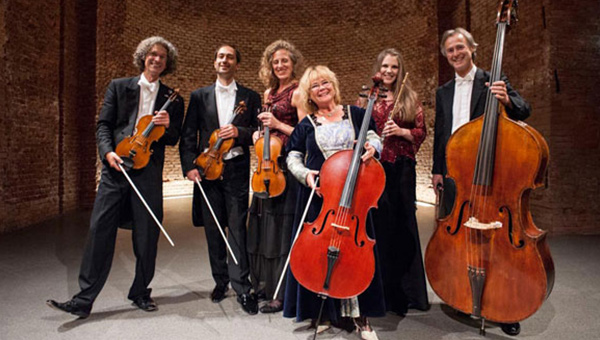
Festive concert in the All-Saint-Court church
Mozart: Requiem
Mozart: Ouvertüre aus “Don Giovanni”
Mozart: Symphonie Nr. 38 “Prager”
Residenz-Solisten
Wolfgang Amadeus Mozart: Requiem in D Minor (K. 626) – Between Genius, Madness, and a Mysterious Commission
Mozart’s Requiem is his final work—and one of music history’s greatest mysteries. Few compositions are so entwined with legend as this Mass for the Dead, on which Mozart worked until his final hours in December 1791.
The “Gray Messenger” and a Dark Premonition
The story of its creation reads like a detective tale. One day, a mysterious, darkly dressed messenger arrives at Mozart’s door and anonymously commissions a Requiem. At the time, Mozart is already in frail health, and the secretive request begins to preoccupy him. He becomes obsessed with the idea that the messenger is a harbinger from the beyond, bringing news of his own death. “I am writing my own funeral song,” he is said to have remarked.
In reality, the enigmatic commissioner was Count Walsegg-Stuppach’s steward. The eccentric count often had works composed to pass off later as his own. He intended to acquire the Requiem under the same pretense.
An Unfinished Legacy
Mozart dies before completing the score. The Lacrimosa breaks off mid-composition. What he leaves behind is a fragment: the opening sections are fully orchestrated, but many later movements exist only as sketches or vocal lines.
Mozart’s widow, Constanze, now faced a dilemma: to secure the promised fee, the work had to be completed. She commissioned Mozart’s student Franz Xaver Süssmayr, who worked closely with Mozart’s sketches and even copied portions of his handwriting. The additions were so convincing that the commissioner accepted them as part of the final work.
A Sound World of Eternity
Musically, the Requiem unfolds a dark, solemn soundscape. In the dramatic key of D minor, it becomes a work of extraordinary beauty and intensity—a musical threshold between human fear, judgment, and hope for redemption.
Overture to Don Giovanni
Mozart’s overture to Don Giovanni also begins in the ominous key of D minor. With massive, almost Dantean chords, the music immediately fills the space—an ominous prelude to the later appearance of the “Stone Guest.” This is followed by a restless, feverish Allegro, brimming with the opera’s demonic energy.The overture condenses all the elements that define the work: tragedy and comedy, menace and vitality. Mozart composed it under immense time pressure; tradition has it that he completed the score the night before the Prague premiere in 1787. During the night, Constanze kept him awake with stories and punch, and by morning the copyists had the freshly written parts. That evening, the orchestra had to play the complex piece almost sight-read.
A typical Mozart moment: genius racing against time.
Festive concert
Fünf Klavierkonzerte
J.S.Bach: Klavierkonzert Nr.1 D-Moll BWV 1052
J.S.Bach: Klavierkonzert Nr.2 E-Dur BWV 1053
J.S.Bach: Klavierkonzert Nr.3 D-Dur BWV 1054
J.S.Bach: Klavierkonzert Nr.4 A-Dur BWV 1055
J.S.Bach: Klavierkonzert Nr.5 F-Moll BWV 1056
Collins Tanujaya, Dongqi Zhang, Naoe Sasaki, Carles Diaz Morros, Rezi Marshania - Klavier & Residenz-Solisten
On this festive occasion, the All Saints’ Court Church Allerheiligen Hofkirche glows in the warm light of candles, opening its venerable spaces for an extraordinary musical experience: the five great Bach piano concertos, masterfully performed by Collins Tanujaya, Dongqi Zhang, Naoe Sasaki, Carles Díaz Morros, and Rezi Marshania, accompanied by the Residenz-Solisten.
Bach’s Piano Concerto No. 1 in D minor, BWV 1052 is considered one of the most powerful and technically demanding works of Baroque music. Originally likely conceived as a violin concerto, it captivates with dramatic energy and a virtuosity that feels strikingly modern.
In contrast, the Piano Concerto No. 2 in E major, BWV 1053 is brighter, more pastoral, and relaxed. It is a prime example of Bach’s masterful parody technique, featuring luminous, dance-like character, buoyant rhythms, and elegant melodies that refresh the senses.
Majestic and radiant, Piano Concerto No. 3 in D major, BWV 1054 is a transcription of Bach’s famous Violin Concerto in E major (BWV 1042). Bach likely created this version between 1738 and 1739 for the concerts of the Collegium Musicum in Leipzig, where he himself performed the solo part on the harpsichord. Its splendid harmonies and dynamic contrasts fill the hall with energy.
The elegant Piano Concerto No. 4 in A major, BWV 1055 is one of Bach’s most radiant and lively works for keyboard. It impresses with subtle counterpoint and sparkling piano passages that artfully complement the strings.
The crowning conclusion is Piano Concerto No. 5 in F minor, BWV 1056, whose passionate drama and poetic delicacy linger long after the final note.
In the intimate atmosphere of candlelight, music, light, and historic architecture merge into an unforgettable experience. Every note becomes a treasure, every phrase an invitation to immerse oneself fully in Bach’s world of sound.
Festive concert
Beethoven: Symphony No. 9
Vivaldi: "The Four Seasons": "Autumn" and "Winter"
Residenz-Solisten
Then begins a work that rises in music history like a vast mountain range: Ludwig van Beethoven’s Symphony No. 9.
At first, the sound seems to emerge from nothingness. Mysterious, vibrating tones begin to gather, gradually taking shape – until suddenly the symphony stands before us: monumental, radiant and profoundly human.
In the Scherzo, an irresistible rhythmic force erupts. Sharply accented and driven with breathtaking precision, the music pulses with defiant vitality, as though life itself were stamping out the rhythm. The third movement opens a wide, singing expanse of sound – intimate, sustained and of touching tenderness.
In the finale, the unprecedented occurs. Beethoven searches, touching upon fragments of the previous movements – only to cast them aside. Then a new melody emerges, softly and simply, almost like a folk song: the theme of the “Ode to Joy.” Rising from the depths of the bass, it gathers strength and unfolds into a triumphant vision. In this moment, Beethoven shatters the boundaries of the symphony.
Friedrich Schiller’s vision of brotherhood becomes sound:
“Joy, bright spark of divinity.”
What resounds here is more than music – it is a call to freedom, fraternity and hope.
The Ninth does not end quietly.
It ends like a sunrise in blazing D major – overwhelming, jubilant, as if Beethoven had wrested a promise from the world itself.
A century earlier, Antonio Vivaldi had already demonstrated how evocative music could be with his cycle "The Four Seasons," though he focused more on nature than on philosophy. In "Autumn," the "Red Priest" first has the violins strike up a dance before imitating the exhaustion of revelers after the harvest with gentle, almost floating melodies—a musical intoxication that subsides into a deep sleep. "Winter," by contrast, makes the listener shiver: through sharp staccato and tremolo strings, the chattering of teeth in the cold is imitated with deceptive realism, while the famous Largo describes the cozy warmth of a heated room as the rain taps softly against the window outside. Vivaldi was so convinced of the narrative power of his music that he accompanied his scores with explanatory sonnets, ensuring every musician knew exactly whether they were portraying a hunting dog or a wanderer slipping on the ice.
Festive concert in the All-Saint-Court church
Corelli: Christmas Concerto
Mozart: Concerto for Flute and Harp – Allegro
Borne: “Carmen Fantasy” for Flute
Smetana: “The Moldau”
Tchaikovsky: Highlights from “The Nutcracker” & “Swan Lake”
Offenbach: Can-Can & Barcarolle
Strauss: Waltz “The Blue Danube”
Janine Schöllhorn - Flute, Emilie Jaulmes – Harp & Residence-Soloists
Arcangelo Corelli's famous Christmas Concerto marks the beginning of our journey into the world of the Baroque. Written "for the night of Christ's birth," it exudes a solemn tranquility. The highlight is the finale, a pastoral whose lilting rhythms evoke the image of shepherds in the fields.
Antonio Vivaldi's flute concerto "La Notte" (The Night) provides a fascinating contrast. Here, we experience not a silent night, but one filled with ghosts and dreams. Vivaldi masterfully uses the flute to musically depict fluttering shadows and nocturnal restlessness—an early example of program music.
With Mozart, a classical balance returns. His Concerto for Flute and Harp is a prime example of elegance. The harp lends the work a silvery sheen that perfectly complements the flute's virtuosic lines.
A completely different kind of virtuosity is encountered in the music of François Borne. His "Carmen Fantasy" is a true firework display for the flute. He takes the passionate themes from Bizet's opera "Carmen" and transforms them into a highly virtuosic showpiece that demands everything from the soloist – from the fateful motifs and the seductive Habanera to the fiery Gypsy Dance and the proud March of the Toreadors.
The orchestra's power is fully unleashed in Bedřich Smetana's "The Moldau." We accompany the river from its two small sources – represented by two shimmering flutes – to its majestic current flowing through Prague. Here, Smetana succeeded in capturing the soul of his Bohemian homeland in music, although the main theme is actually based on an old Swedish folk song he encountered during his time in Gothenburg.
Highlights from the ballets of Pyotr Ilyich Tchaikovsky provide a fairytale-like highlight. Whether it was the majestic entrance of the Swan Knight in "Swan Lake" or the enchanting character dances from "The Nutcracker," Tchaikovsky was the undisputed magician of melody.
Jacques Offenbach provides the rousing finale. While the Barcarolle from "The Tales of Hoffmann" gently rocks us in a Venetian gondola, the famous Can-Can from "Orpheus in the Underworld" irresistibly sweeps us from our seats. Originally conceived as a satire on Parisian society, this wild dance became the epitome of French joie de vivre.
Festive concert
Mozart: Overture to "The Magic Flute"
Mozart: Symphony No. 38 "Prague"
Beethoven: Symphony No. 5 "Fate" – Allegro
Grieg: Peer Gynt Suite
Dvořák: "From the New World" Suite
Residenz-Solisten
With its historical backdrop, the Residence's All Saints Court Church offers a perfect ambience for concerts with the Residence-Soloists. During the Second World War, the formerly furnished church has been completely destroyed and was rebuilt in its current state as a reminder. The Residence-Soloists play selected masterpieces in a wonderful ambience.
Festive concert
J.S. Bach: Keyboard Concerto No. 1 in D minor, BWV 1052
J.S. Bach: Keyboard Concerto No. 2 in E major, BWV 1053
J.S. Bach: Keyboard Concerto No. 3 in D major, BWV 1054
J.S. Bach: Keyboard Concerto No. 4 in A major, BWV 1055
J.S. Bach: Keyboard Concerto No. 5 in F minor, BWV 1056
Collins Tanujaya, Dongqi Zhang, Naoe Sasaki, Carles Diaz Morros, Rezi Marshania - Klavier & Residenz-Solisten
The Ascension Day concert is dedicated to five of Johann Sebastian Bach’s most significant solo concertos for keyboard instruments—works he compiled during his Leipzig years in the late 1730s that have gone down in music history as groundbreaking milestones.
The program opens with the powerful and dramatic Keyboard Concerto No. 1 in D minor (BWV 1052); distinguished by its intense expressive force and stormy rhythms, it is considered the most virtuosic work in the series and is believed to be based on a lost violin concerto.
It is followed by the Concerto in E major (BWV 1053), which radiates a luminous, celebratory serenity and demands a profound lyrical sensibility in its slow movement.
The third work is the Concerto in D major (BWV 1054)—transposed from Bach’s famous Violin Concerto in E major—which testifies to a Baroque zest for life through its festive, radiant character.
The subsequent fourth concerto, in A major (BWV 1055), is characterized by a singing, smooth, and warm timbre; the intimate Larghetto movement, in particular, unfolds as a chamber-music-style dialogue between the solo instrument and the strings.
The concert concludes with the compact Keyboard Concerto No. 5 in F minor (BWV 1056); despite its shorter duration, it captivates through striking contrasts and remains unforgettable, above all, for its world-famous, poignantly melancholic middle movement.
