


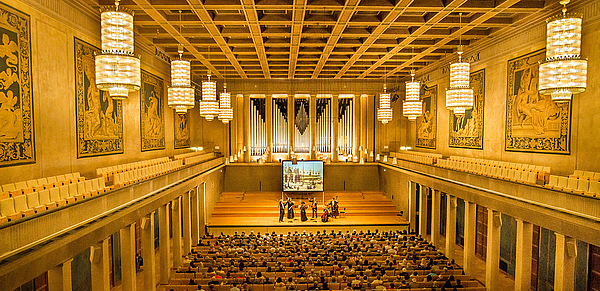
Master Concert
Vivaldi: "The Four Seasons" – Excerpts
Beethoven: Symphony No. 9 in D minor
Residence-Soloists
The Hercules Hall was originally the throne room of Louis I and was built as a concert hall after its reconstruction. It served as a replacement for Klenze’s Odeon, which was also destroyed. Until the opening of the Philharmonie am Gasteig, it was the most important concert hall in Munich. Its name comes from the tapestries depicting the Hercules saga commissioned by Duke Albrecht V in 1556.
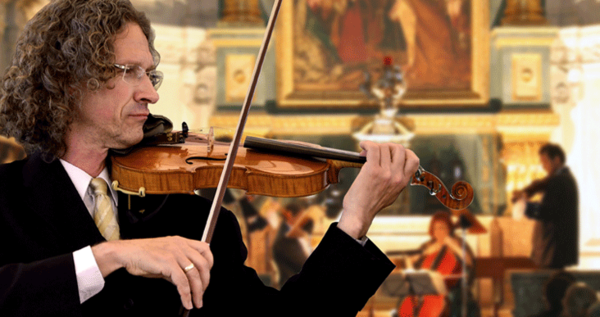
Special concert for Good Friday
Haydn: Joseph Haydn’s The Seven Last Words of Our Saviour on the Cross - in the version with string quartet dedicated to the archbishop of Cádiz.
Joseph Haydn – The Seven Last Words of Our Savior on the Cross, String Quartet Version
Joseph Haydn’s The Seven Last Words of Our Savior on the Cross stands as one of the most profound sacred works of the late 18th century, blending deep spiritual expression with masterful compositional clarity. Originally composed in 1786 for Good Friday liturgy in Cádiz as an orchestral meditation on the seven last words of Christ on the cross, Haydn later arranged the work for string quartet, dedicating this version to the Archbishop of Cádiz. This intimate arrangement allows listeners to experience the work in a concentrated and deeply personal way, highlighting the expressive power of each instrumental voice.
The work is structured in eight movements: seven meditative movements, each corresponding to one of Christ’s last words, followed by a concluding Sonata movement representing resurrection and hope. Each movement is carefully crafted to reflect the emotional and spiritual character of the text:
“Father, forgive them, for they know not what they do” – A slow, poignant movement conveying Christ’s compassion and humility.
“Today you will be with me in Paradise” – Gentle melodies and lyrical contours evoke a sense of promise and serene acceptance.
“Woman, behold your son” – Expressive interplay between the quartet’s voices brings the intimate human dimension to life.
“My God, my God, why have you forsaken me?” – The most dramatic movement, with dissonances and dense textures reflecting pain and human anguish.
“I thirst” – Simplicity, rhythmic clarity, and restraint convey human vulnerability and longing.
“It is finished” – A dignified and solemn movement representing the fulfillment of divine purpose.
“Father, into your hands I commend my spirit” – Harmonic calm and meditative atmosphere lead to spiritual surrender and reflection.
Sonata / “Terremoto” – The final Allegro, originally conceived as an expression of resurrection, conveys hope, light, and transcendence.
The string quartet version distills the orchestral grandeur into the four-part intimate texture of two violins, viola, and cello. Each instrument carries melodic and harmonic responsibility, bringing the listener into immediate contact with the work’s inner life. The balance of structural rigor, emotional depth, and dramatic expression makes this version not only a masterpiece of chamber music but also a pinnacle of sacred composition.
Performing this work demands both technical precision and a deep understanding of its spiritual dimensions. The quartet arrangement allows the music to unfold in a meditative, almost contemplative manner, emphasizing the emotional resonance of every phrase. Haydn’s extraordinary ability to translate universal human emotions—grief, compassion, hope, and transcendence—into musical language is fully evident in this work.
Through this composition, Haydn achieves the rare feat of uniting the reflective power of sacred music with the intimacy and tension of chamber music. The result is a work of timeless beauty and profound emotional impact, inviting audiences into a deeply moving spiritual journey.
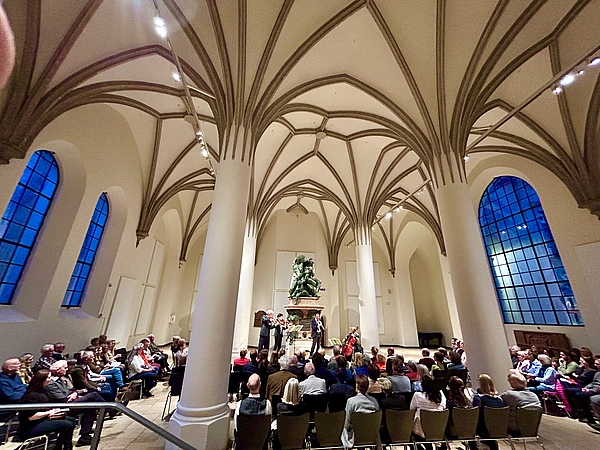
Classical music in the museum
Vivaldi: Harfenkonzert
Vivaldi: Flötenkonzert „La tempesta di mare“
Mozart: Arien aus „Die Zauberflöte“ & "Die Hochzeit des Figaro“
Haydn: Konzert für Flöte und Harfe
Smetana: Die Moldau
Bizet: Carmen-Fantasy
J.Schöllhorn - Flöte, E.Jaulmes - Harfe & Residenz Solisten
The concert series "Classical music in the museum" combines an 60 minutes concert by the Residence Soloists and the museum entrance.
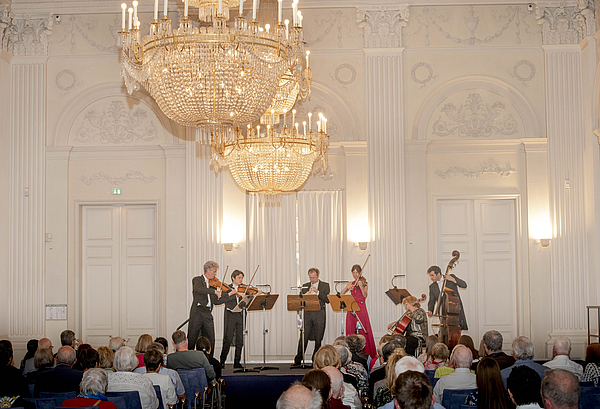
Master Concert in the Max-Joseph Hall with candlelight
Vivaldi: Harp Concerto
Haydn: Concerto for Flute and Harp – Allegro
Mozart: Concerto for Flute and Harp
Bizet: Carmen Fantasy
Debussy: Danse sacrée et danse profane
Smetana: The Moldau
Janine Schöllhorn - Flute, Emilie Jaulmes - Harp & Residenz-Solisten
Experience an evening of musical magic that showcases the enchanting, ethereal sounds of the harp and flute. The Residenz Solisten, joined by two outstanding female soloists, present a varied program ranging from Baroque grace and Classical elegance to the rich, evocative soundscapes of Impressionism and the Late Romantic era.
The evening opens with Antonio Vivaldi’s delicate harp concerto, capturing the richness of the Baroque style through sparkling, pearly musical patterns. This is followed by Joseph Haydn’s spirited Concerto for Flute and Harp (Allegro), which engages the two solo instruments in a lively dialogue. At the heart of the program lies Wolfgang Amadeus Mozart’s unique Concerto for Flute and Harp. It captivates the audience with its extraordinary tonal variety, enchanting melodies, and a playful lightness that instantly draws the listener in.
After the intermission, Claude Debussy’s mystical *Danse sacrée et danse profane* transports the audience into ethereal soundscapes, followed by the virtuosic *Carmen Fantasy*, which radiates Spanish temperament and dazzling technical brilliance. The evening concludes in grand style with Bedřich Smetana’s famous tone poem *The Moldau* (Vltava), tracing the course of the Czech river in all its scenic and emotional diversity.
