


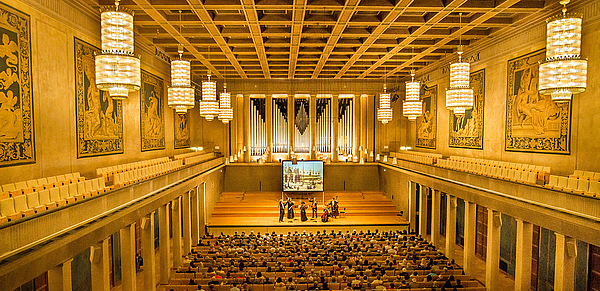
Master Concert
J.S. Bach: Brandenburg Concerto No. 2
J.S. Bach: Brandenburg Concerto No. 4
J.S. Bach: Brandenburg Concerto No. 5
J.S. Bach: Double Concerto for Oboe and Violin
Händel: "Water Music"
Michael Kofler – Flute (MPhil), Rodrigo Belío - Cembalo, Gabriele Cassone – Trumpet, Giovanni De Angeli – Oboe, Karsten Gebhardt – Violin, Marcelino Rojas – Violin & Residence Soloists (Residenz-Solisten)
Baroque Brilliance: From the Court to the River
Baroque music often owes its most dazzling moments to practical coincidences or courtly obligations, as seen in Johann Sebastian Bach’s famous Brandenburg Concertos. When Bach sent the scores to the Margrave of Brandenburg in 1721, it was essentially a musical job application. The Concerto No. 2 stands out for its almost acrobatic trumpet part. It is said that Bach wrote it specifically for a virtuoso in Köthen; in Brandenburg, however, the scores likely gathered dust in the archives, as no musician in the local chapel could master those dizzying heights.
In Concerto No. 4, Bach’s fondness for sonic experimentation shines through as he combines a solo violin with two "echo flutes," giving the work a bright, pastoral character. Bach’s pragmatic side is evident in Concerto No. 5, which is considered the birth of the modern keyboard concerto. He moved the harpsichord—previously a background accompaniment—into the spotlight. Anecdote has it that he composed this work as a "test drive" for a precious new harpsichord he had just acquired from Berlin for his Prince; the monumental solo cadenza in the first movement was quite simply intended to impress the audience (and the buyer).
Bach’s Double Concerto for Oboe and Violin also has a storied past. Today, the work officially survives only in a version for two pianos. However, musicologists reconstructed the original version because the flowing, almost sighing melodies of the slow movement were so clearly crafted for the "breathing" oboe and the singing violin. The famous Bach scholar Albert Schweitzer even believed that only in this instrumentation does the true soul of the piece emerge.
In stark contrast to Bach’s more intimate court music, George Frideric Handel’s "Water Music" was designed for grand outdoor spectacle. In July 1717, Handel accompanied King George I of England on a nocturnal boat trip along the Thames. The King was so enchanted by the festive splendor of the music that he forced the musicians to play the entire suite three times in a row. For the orchestra, seated on a swaying boat alongside the royal barge, this meant hours of continuous performance without a break—a feat of endurance that transformed the Thames into a massive concert stage until the early hours of the morning.
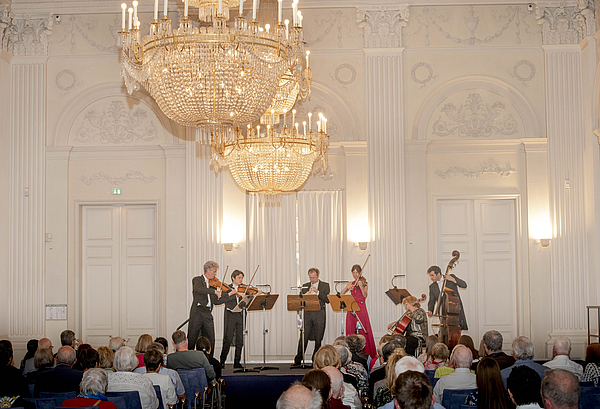
Master Concert in the Max-Joseph Hall with candlelight
Vivaldi: „Die vier Jahreszeiten“ - gesamt
Mozart: Oboenkonzert C-Dur
Grieg: Peer Gynt – Suite
Marcelino Rojas - Violine, Giovanni De Angeli - Oboe& Residenz Solisten
The best things come in small packages: With wonderful stucco works and crystal, chandeliers equipped Max's Joseph hall is for many a small pearl in the residence and forms the perfect frame for classical concerts. Just chamber music friends estimate the intimate character of the space.
Master Concert in the Max-Joseph Hall with candlelight
Vivaldi: "The Four Seasons" – Complete
Vivaldi: Guitar Concerto
Albéniz: "Asturias"
Tárrega: Masterworks for Solo Guitar
Boccherini: "Madrid" & "Fandango"
Marcelino Rojas - Violine, Leonhard Becker – Gitarre & Residenz Solisten
An evening of musical contrasts transports the audience from the Baroque palaces of Italy straight to the vibrant, sun-drenched heart of Spain.
The first half centers on Antonio Vivaldi’s masterpiece, *The Four Seasons*. Vivaldi possessed a unique gift for translating nature into sound—from the fresh awakening of spring, through the oppressive heat of summer and the autumn hunt, to the biting frost of winter. Brilliant violin soloist Marcelino Rojas guides the audience through this magnificent musical portrait of the natural world. Next, the same composer’s guitar concerto—performed by Leonhard Becker—bridges the gap to the rich, plucked tones that cast the Baroque era in a whole new light.
After the intermission, the curtain rises on the multifaceted music of the Iberian Peninsula, performed by the Residenz Soloists. Isaac Albéniz’s world-famous *Asturias* captivates with its dramatic power and mysterious Spanish folklore, while Francisco Tárrega’s solo guitar masterpieces move the listener with their poetic depth and delicate intricacy. The evening concludes in spectacular fashion with Luigi Boccherini’s spirited movements "Madrid" and "Fandango." Capturing the street culture, dance, and exuberant zest for life of old Spain, they bring the concert to a rousing finish.
Master Concert in the Max-Joseph Hall with candlelight
Verdi: Overture to "La Traviata"
Mozart: Symphony No. 38 "Prague"
Mendelssohn: Violin Concerto in E minor
Dvořák: "From the New World" Suite
Strauss: "Voices of Spring" Waltz
Marcelino Rojas – Violine & Residenz Solisten
Look forward to an unforgettable concert experience that unites the profound emotions of the Classical and Romantic eras in a richly varied program.
The evening begins dramatically and movingly with the overture to Giuseppe Verdi’s *La Traviata*, one of the most famous operas in music history. Next, the genius of Wolfgang Amadeus Mozart shines through in his Symphony No. 38, the "Prague"—a spirited, multi-layered work filled with witty turns. The program continues with Felix Mendelssohn Bartholdy’s Violin Concerto in E minor—a piece that is at once virtuosic, passionate, and lyrical, sure to stir the Romantic heart.
After the intermission, let yourself be transported to distant horizons and vast landscapes by the yearning melodies and powerful rhythms of Antonín Dvořák’s *From the New World* Suite. For a magnificent finale, Johann Strauss’s famous *Voices of Spring* waltz sparkles with Viennese charm, lightness, and pure *joie de vivre*.
An evening of musical highlights that spans the centuries, taking you on a journey from delicate moments to exhilarating sounds!
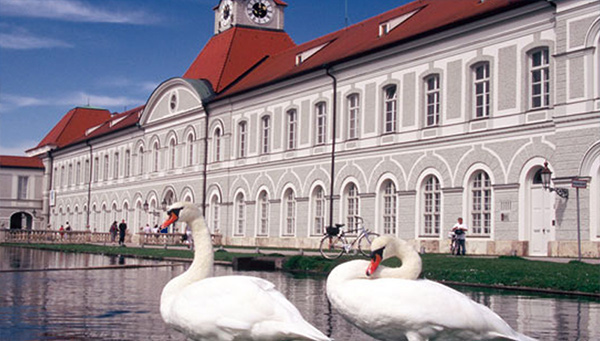
Festive concert
Mozart: Overture to "Don Giovanni"
Mozart: Symphony No. 38 "Prague"
Bellini: Oboe Concerto
Mendelssohn: Violin Concerto in E minor
Strauss: "Voices of Spring" Waltz
Marcelino Rojas - Violine, Giovanni De Angeli - Oboe & Residenz-Solisten
The Nymphenburg Palace was the birthplace of the fairy tale king Ludwig II, here he spent his childhood. The 7-year-old Wolfgang Amadeus Mozart and his sister Nannerl gave a concert here in the castle with great success.
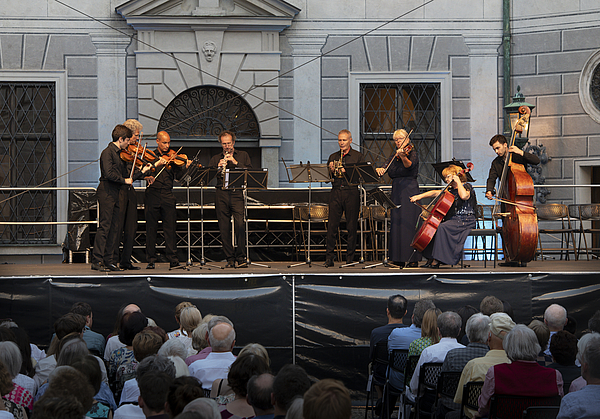
Sommer concert at the Brunnenhof Open Air
Handel: "Water Music" for Trumpet & Strings
Telemann: Tafelmusik for Trumpet, Oboe & Strings
Haydn: Trumpet Concerto
Mendelssohn: Violin Concerto in E Minor
Gabriele Cassone - Trompete, Marcelino Rojas - Violine & Residenz-Solisten
Experience an unforgettable concert evening filled with musical masterpieces.
The program opens with George Frideric Handel’s (1685–1759) *Water Music*. Originally composed for a large Baroque orchestra to accompany a royal pleasure cruise on the Thames, this work—in an arrangement for trumpet and strings—radiates a festive, majestic, yet lighthearted atmosphere, with the bright, triumphant trumpet often taking the lead.
Next comes Georg Philipp Telemann’s (1681–1767) *Tafelmusik* (Table Music). Once a collection synonymous with sophisticated dining and social entertainment, it creates a colorful, elegant Baroque soundscape rich in contrast through the combination of trumpet and oboe set against a delicate string foundation.
Joseph Haydn’s (1732–1809) Trumpet Concerto in E-flat Major (1796) stands as one of the absolute highlights of the trumpet repertoire. Here, Haydn makes innovative use of the newly invented keyed trumpet—which allowed for a full chromatic scale—blending spirited, virtuosic passages with a profound, lyrical middle movement.
The evening reaches its emotional climax with Felix Mendelssohn Bartholdy’s (1809–1847) Violin Concerto in E Minor (Op. 64). Breaking with many Classical conventions—the solo violin enters with almost no orchestral introduction, the movements flow seamlessly into one another, and the first movement features a famous cadenza performed by the solo violin alone—this work ranks among the most expressive and beloved concertos of the Romantic era
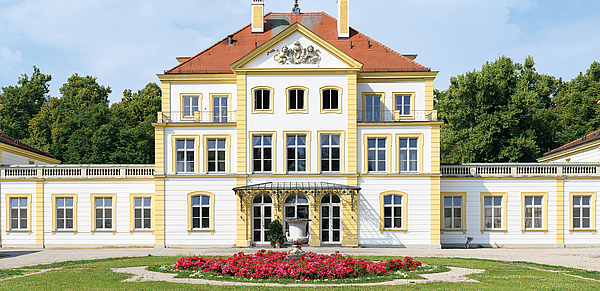
Open-Air Concert in Fürstenried Palace
Vivaldi: "The Four Seasons"
Vivaldi: Guitar Concerto
Albéniz: "Asturias"
Tárrega: Masterworks for Solo Guitar
Boccherini: "Madrid" & "Fandango"
Marcelino Rojas - Violine, Leonhard Becker – Gitarre & Residenz-Solisten
Fürstenried Palace is the former hunting lodge of the Bavarian rulers, built between 1715 and 1717 by Elector Max Emanuel. King Otto spent his final years here. In the summer, open-air concerts are held in the palace park at 7:30 p.m. Here, you can enjoy the refreshing summer air just as the Bavarian rulers did before you. The concerts feature the Residenz Soloists exclusively.
