


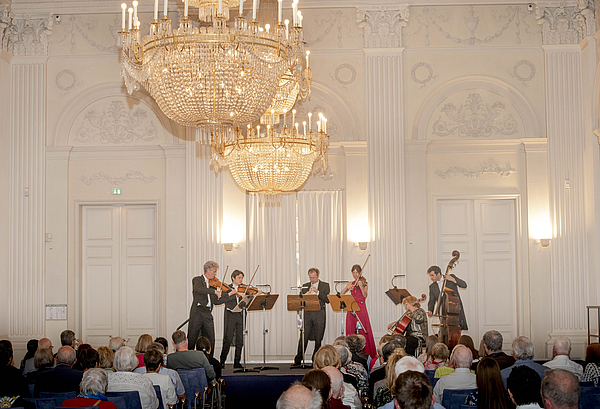
Master Concert in the Max-Joseph Hall with candlelight
Corelli: Christmas Concerto
Vivaldi: Flute Concerto “La notte”
Haydn: Concerto for Flute and Harp
Borne: "Carmen Fantasy" for Flute
Smetana: "The Moldau" (aus Má vlast)
Tchaikovsky: Highlights from "The Nutcracker" & “Swan Lake”
Offenbach: Can-Can & Barcarolle
Janine Schöllhorn - Flute, Emilie Jaulmes – Harp & Residenz Solisten
Arcangelo Corelli opens our journey into the Baroque world with his famous "Christmas Concerto." Written "for the night of the Nativity," it exudes a solemn tranquility. The highlight is the finale—a Pastorale whose swaying rhythms evoke images of shepherds in the fields. Antonio Vivaldi provides a thrilling contrast with his flute concerto "La Notte" (The Night). Here, we experience not a silent night, but one filled with ghosts and dreams. Vivaldi masterfully uses the flute to depict flickering shadows and nocturnal unrest—an early masterpiece of program music.
Classical balance returns with Joseph Haydn. His Concerto for Flute and Harp (often performed as an arrangement of the double concerto for flute and oboe) is a prime example of elegance. The harp lends the work a silvery shimmer that perfectly complements the flute's virtuosic lines. A very different kind of virtuosity awaits in François Borne’s "Carmen Fantasy"—a true firework display for the flute. Borne takes the passionate themes from Bizet’s opera Carmen and transforms them into a high-octane showpiece that demands everything from the soloist, from fateful motifs and the seductive Habanera to the fiery gypsy dance and the proud march of the toreros.
The full power of the orchestra unfolds in Bedřich Smetana’s "The Moldau." We follow the river from its two small springs—represented by two shimmering flutes—to its majestic flow through Prague. Smetana succeeded in capturing the soul of his Bohemian homeland, even though the main theme is actually based on an old Swedish folk song he encountered during his time in Gothenburg.
A fairytale highlight is set by the selections from Peter Tchaikovsky’s ballets. Whether it is the majestic entrance of the swan knight in "Swan Lake" or the enchanting character dances from "The Nutcracker," Tchaikovsky was the undisputed magician of melody. Finally, Jacques Offenbach provides a rousing conclusion. While the "Barcarolle" from The Tales of Hoffmann gently rocks us in a Venetian gondola, the famous "Can-Can" from Orpheus in the Underworld will inevitably pull you from your seats. Originally intended as a satire of Parisian society, this wild dance became the ultimate symbol of French joie de vivre.
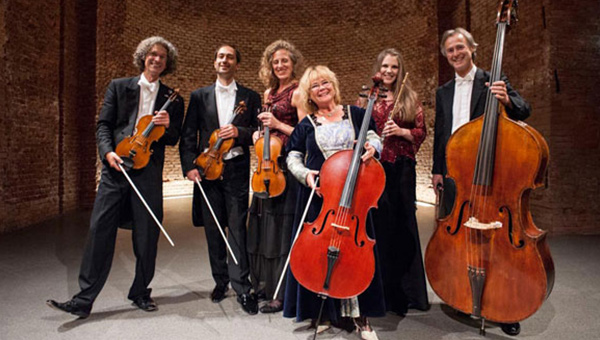
Festive concert in the All-Saint-Court church
Corelli: Christmas Concerto
Mozart: Concerto for Flute and Harp – Allegro
Borne: “Carmen Fantasy” for Flute
Smetana: “The Moldau”
Tchaikovsky: Highlights from “The Nutcracker” & “Swan Lake”
Offenbach: Can-Can & Barcarolle
Strauss: Waltz “The Blue Danube”
Janine Schöllhorn - Flute, Emilie Jaulmes – Harp & Residence-Soloists
Arcangelo Corelli's famous Christmas Concerto marks the beginning of our journey into the world of the Baroque. Written "for the night of Christ's birth," it exudes a solemn tranquility. The highlight is the finale, a pastoral whose lilting rhythms evoke the image of shepherds in the fields.
Antonio Vivaldi's flute concerto "La Notte" (The Night) provides a fascinating contrast. Here, we experience not a silent night, but one filled with ghosts and dreams. Vivaldi masterfully uses the flute to musically depict fluttering shadows and nocturnal restlessness—an early example of program music.
With Mozart, a classical balance returns. His Concerto for Flute and Harp is a prime example of elegance. The harp lends the work a silvery sheen that perfectly complements the flute's virtuosic lines.
A completely different kind of virtuosity is encountered in the music of François Borne. His "Carmen Fantasy" is a true firework display for the flute. He takes the passionate themes from Bizet's opera "Carmen" and transforms them into a highly virtuosic showpiece that demands everything from the soloist – from the fateful motifs and the seductive Habanera to the fiery Gypsy Dance and the proud March of the Toreadors.
The orchestra's power is fully unleashed in Bedřich Smetana's "The Moldau." We accompany the river from its two small sources – represented by two shimmering flutes – to its majestic current flowing through Prague. Here, Smetana succeeded in capturing the soul of his Bohemian homeland in music, although the main theme is actually based on an old Swedish folk song he encountered during his time in Gothenburg.
Highlights from the ballets of Pyotr Ilyich Tchaikovsky provide a fairytale-like highlight. Whether it was the majestic entrance of the Swan Knight in "Swan Lake" or the enchanting character dances from "The Nutcracker," Tchaikovsky was the undisputed magician of melody.
Jacques Offenbach provides the rousing finale. While the Barcarolle from "The Tales of Hoffmann" gently rocks us in a Venetian gondola, the famous Can-Can from "Orpheus in the Underworld" irresistibly sweeps us from our seats. Originally conceived as a satire on Parisian society, this wild dance became the epitome of French joie de vivre.
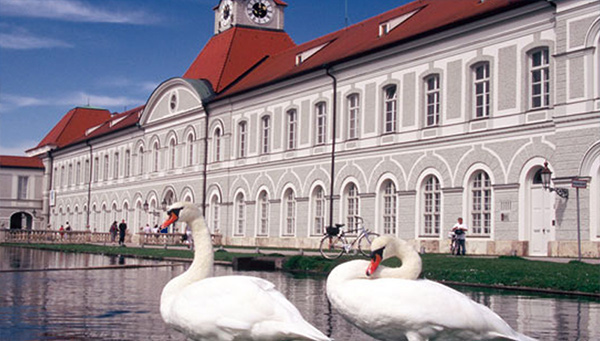
Festive concert
Verdi: Overture from "The Force of Destiny"
Vivaldi: Harp Concerto
Bellini: Oboe Concerto
Mahler: Symphony No. 5 – Adagietto
Debussy: Danse sacrée et danse profane
Grieg: Peer Gynt Suite
Mascagni: "Intermezzo" from "Cavalleria rusticana"
Offenbach: Barcarolle & Can-Can
Emilie Jaulmes - Harp, Giovanni de Angeli - Oboe & Residence-Soloists
The Nymphenburg Palace was the birthplace of the fairy tale king Ludwig II, here he spent his childhood. The 7-year-old Wolfgang Amadeus Mozart and his sister Nannerl gave a concert here in the castle with great success.
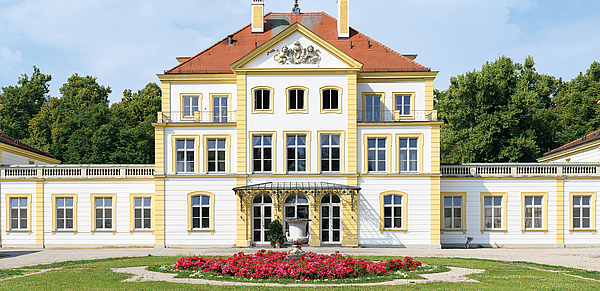
Concert in Fürstenried Palace
Vivaldi: Harp Concerto
Vivaldi: "The Four Seasons" – "Winter"
Mozart: Arias from "The Magic Flute" & "The Marriage of Figaro"
Haydn: Concerto for Flute and Harp
Bizet: Carmen Fantasy
Smetana: The Moldau
Janine Schöllhorn - Flöte, Emilie Jaulmes – Harfe & Residenz-Solisten
Die neue Konzertreihe auf Schloss Fürstenried findet einmal im Monat sonntags vormittags als Matinée im Goldenen Saal des Schlosses statt. Das ehemalige Jagdschloss der bayerischen Herrscher, zuletzt Wohnsitz von König Otto I., ist nicht öffentlich zugänglich. In Verbindung mit einem ca. 80 minüten Konzert der Residenz-Solisten können Besucher einen Einblick in die schöne Schlossanlage bekommen. Im Sommer finden die Konzerte abends in einem ganz besonderen Ambiente im Schlosspark statt. Virtuose Melodien und gern gehörte Klassiker gespielt von den Residenz-Solisten machen dieses Konzert zu einem Erlebnis der besonderen Art.
Nach dem Konzert gibt es die Möglichkeit einen Lunch im Schloss einzunehmen. Dieser ist optional zubuchbar.
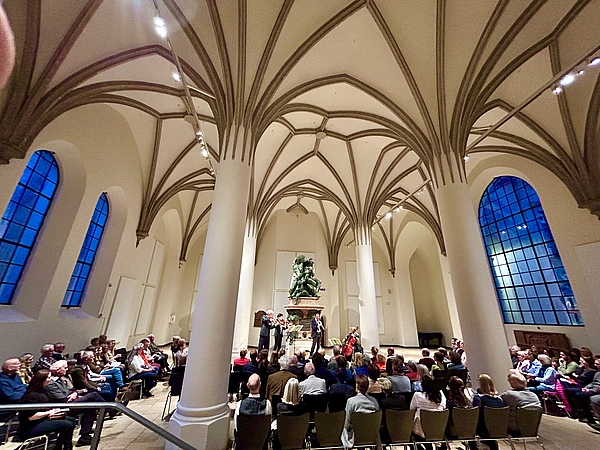
Classical music in the museum
Vivaldi: Harfenkonzert
Vivaldi: Flötenkonzert „La tempesta di mare“
Mozart: Arien aus „Die Zauberflöte“ & "Die Hochzeit des Figaro“
Haydn: Konzert für Flöte und Harfe
Smetana: Die Moldau
Bizet: Carmen-Fantasy
J.Schöllhorn - Flöte, E.Jaulmes - Harfe & Residenz Solisten
The concert series "Classical music in the museum" combines an 60 minutes concert by the Residence Soloists and the museum entrance.
Master Concert in the Max-Joseph Hall with candlelight
Vivaldi: Harp Concerto
Haydn: Concerto for Flute and Harp – Allegro
Mozart: Concerto for Flute and Harp
Bizet: Carmen Fantasy
Debussy: Danse sacrée et danse profane
Smetana: The Moldau
Janine Schöllhorn - Flute, Emilie Jaulmes - Harp & Residenz-Solisten
Experience an evening of musical magic that showcases the enchanting, ethereal sounds of the harp and flute. The Residenz Solisten, joined by two outstanding female soloists, present a varied program ranging from Baroque grace and Classical elegance to the rich, evocative soundscapes of Impressionism and the Late Romantic era.
The evening opens with Antonio Vivaldi’s delicate harp concerto, capturing the richness of the Baroque style through sparkling, pearly musical patterns. This is followed by Joseph Haydn’s spirited Concerto for Flute and Harp (Allegro), which engages the two solo instruments in a lively dialogue. At the heart of the program lies Wolfgang Amadeus Mozart’s unique Concerto for Flute and Harp. It captivates the audience with its extraordinary tonal variety, enchanting melodies, and a playful lightness that instantly draws the listener in.
After the intermission, Claude Debussy’s mystical *Danse sacrée et danse profane* transports the audience into ethereal soundscapes, followed by the virtuosic *Carmen Fantasy*, which radiates Spanish temperament and dazzling technical brilliance. The evening concludes in grand style with Bedřich Smetana’s famous tone poem *The Moldau* (Vltava), tracing the course of the Czech river in all its scenic and emotional diversity.
Festive concert
Vivaldi: Harp Concerto
Mozart: Concerto for Flute and Harp
Haydn: Concerto for Flute and Harp
Debussy: Danse sacrée et danse profane
Bizet: Carmen Fantasy
Smetana: "The Moldau"
Offenbach: Barcarolle & Can-Can
Janine Schöllhorn - Flöte, Emilie Jaulmes - Harfe & Residenz-Solisten
The Nymphenburg Palace was the birthplace of the fairy tale king Ludwig II, here he spent his childhood. The 7-year-old Wolfgang Amadeus Mozart and his sister Nannerl gave a concert here in the castle with great success.
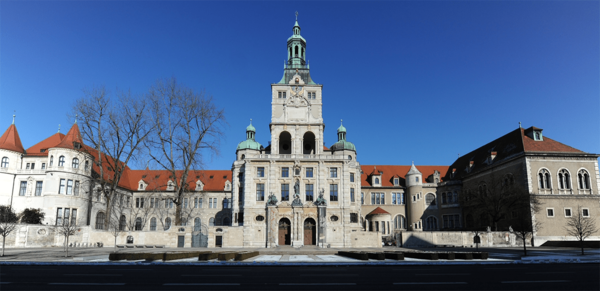
Classical music in museum Open Air, Kanonen court (rainy weather - Mars-Venus hall)
Vivaldi: Harp Concerto
Vivaldi: Flute Concerto "La tempesta di mare"
Haydn: Concerto for Flute & Harp
Bizet: Carmen Fantasy
Smetana: "The Moldau"
Offenbach: Barcarolle & Can-Can
Janine Schöllhorn - Flöte, Emilie Jaulmes - Harfe & Residenz-Solisten
The concert series "Classical music in the museum" combines an 60 minutes concert by the Residence Soloists and the museum entrance.
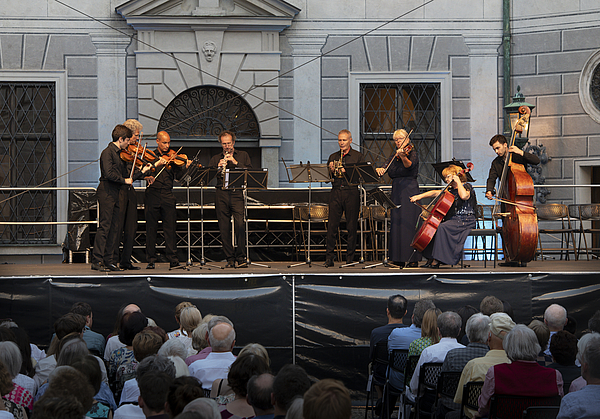
Sommer concert at the Brunnenhof Open Air
Verdi: Overture from “The Force of Destiny”
Mozart: Concerto for Flute and Harp – Allegro
Mahler: Symphony No. 5 – Adagietto
Bizet: "Carmen Fantasy" for Flute
Smetana: "The Moldau"
Offenbach: "Can-Can" & "Barcarolle"
J. Strauss: "The Blue Danube" – Waltz
Janine Schöllhorn - Flöte, Emilie Jaulmes - Harfe & Residenz Solisten
The antiquarium wing built under Duke Albrecht V forms the southern wing of a courtyard complex rounded off under Duke Maximilian I. The courtyard, which was used for tournaments and as a carriage driveway at the time, got its name from the fountain in the center of the eight-sided courtyard, which is crowned by a bronze statue of Duke Otto I, the first Bavarian duke from the House of Wittelsbach.
Festive concert
Vivaldi: Harp Concerto
Haydn: Concerto for Flute & Harp
Mozart: Concerto for Flute & Harp – Allegro
Debussy: Danse sacrée et danse profane
Bizet: Carmen Fantasy
Smetana: "The Moldau"
Offenbach: Barcarolle & Can-Can
J. Strauss: "The Blue Danube" – Waltz
Janine Schöllhorn - Flöte, Emilie Jaulmes - Harfe & Residenz-Solisten
The Nymphenburg Palace was the birthplace of the fairy tale king Ludwig II, here he spent his childhood. The 7-year-old Wolfgang Amadeus Mozart and his sister Nannerl gave a concert here in the castle with great success.
