


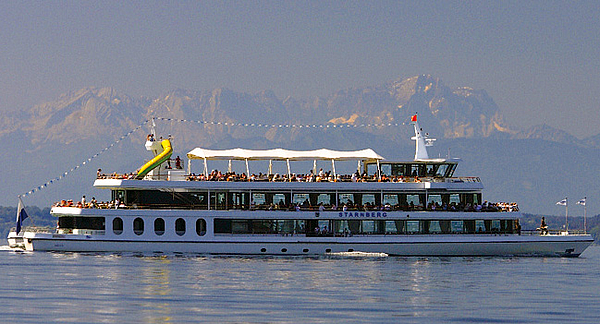
Royal water music
A truly special boat trip
Departure 6:30 PM - Starnberg Arrival 10:00 PM - Starnberg
Enjoy a sparkling wine reception and a delicious 3-course meal including beverages.
Menu
Appetizer:
Vitello Tonnato, 1 prawn, antipasti, bruschetta, melon with prosciutto, smoked salmon
Main Course:
Veal shoulder, Schilcher wine sauce, fresh market vegetables, potato gratin
Vegetarian:
Cannelloni with ricotta and spinach filling, tomato sauce, basil
Dessert:
Quark strudel with vanilla sauce
Vegetarian and special allergen-free menus are available upon request up to one month prior to departure.
The team of Bavaria Klassik welcomes his guests on board of the luxury ship MS Starnberg on the Starnberger lake. Be King for a day and discover the ancient stories of the lake and the palaces.
MS STARNBERG offers you the possibility to celebrate like the Bavarian kings.
In the middle of the evening is the „royal water music“ which takes place in the excellent acoustics of the salon on the main deck. The residence soloists with members of the Munich members of a philharmonic orchestra play masterpieces of composers like Vivaldi, Händel, Corelli and Mozart, musician, which have already been beloved and promoted by the royal family.
You will be welcome with a secco glass and will enjoy a 3 courses dinner(drinks included)
At the end you can enjoy fireworks over the sea! Come on board!
Vegetarian menu only on pre-order ! Special allergenfree Menus on request until one month before departure.
Departure: 18:30 Starnberg Arrival: 22:00 Starnberg
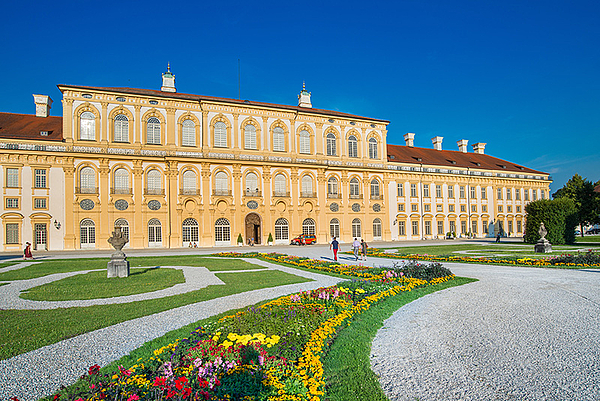
Festive concert
Vivaldi: The Four Seasons
Mozart: Serenade Eine kleine Nachtmusik
Rossini: String Serenade in C Major & “Aria of Figaro”
Brahms: Hungarian Dance No. 6
Simon Zhu *- violin & Residenz Soloists
* 1.Pricewinner Premio Paganini Genoa 2023
Following this achievement, he performed for King Charles III on the famous “Cannone” by Guarneri del Gesù.
A summer festival concert at Schleißheim Palace: the evening air lies gently over the baroque façades, the sky stretches wide above the garden parterre, and even before the first note is played, the scene itself seems to breathe music. In this radiant setting, Antonio Vivaldi’s Le quattro stagioni unfolds.
When Vivaldi published these concertos in 1725, he created more than agreeable Baroque music—he designed a living theater of nature. In Spring, the violins chirp like excited birds, streams murmur in flowing lines, everything seems to bloom. Yet the idyll is not without interruption: a brief thunderstorm sweeps through, tremolos flashing like lightning across the orchestra. In the second movement, the shepherd rests, dreamily sketched by the solo violin, while the viola with dry, repeated notes imitates the “barking dog”—a charming detail that sharpens the imagery with a wink.
Summer lays a heavy weight on the shoulders. In the accompanying sonnets, Vivaldi explains: the cuckoo calls, the turtledove responds, a gentle wind stirs. Beneath the surface, tension grows. Finally, the storm breaks, unleashed and dramatic, as if the heavens themselves discharge over the palace gardens.
Autumn celebrates the harvest. Dance rhythms stomp, wine flows freely, the violins laugh. Merriment and good wine lull the peasants to sleep. During the hunt, gunshots ring out while the fleeing game is musically depicted in fast runs by the solo violin.
Winter finally cuts sharply through the summer warmth of this evening. The strings make the teeth chatter, rapid repetitions freeze the air. Footsteps crunch on ice, skaters glide—and fall. Yet even here, there is beauty in frost, a clear, sparkling transparency.
A change of scene: Wolfgang Amadeus Mozart’s Eine kleine Nachtmusik begins, seemingly made for such an open-air evening. Perhaps originally composed for a summer gathering, it now epitomizes classical cheerfulness. The themes are radiant, the elegance effortless. That a movement of the serenade is lost makes it a fragment—but one that feels complete.
Italian temperament enters with Gioachino Rossini. His string serenade bursts with energy, and in the “Aria of Figaro” from The Barber of Seville, the music races along in breathless tempo. Wit, virtuosity, and exuberant joy combine into a musical firework that sets even the palace walls vibrating.
On this summer evening at Schleißheim Palace, a panorama of the seasons and moods unfolds—nature, theater, and musical storytelling blending into a vivid, unforgettable experience.
Festive concert
Vivaldi: The Four Seasons
Mozart: Serenade Eine kleine Nachtmusik
Rossini: String Serenade in C Major & “Aria of Figaro”
Brahms: Hungarian Dance No. 6
Simon Zhu *- violin & Residenz Soloists
*1st Prize at the Premio Paganini in Genoa 2023. Following this achievement, he performed for King Charles III on the famous “Cannone” by Guarneri del Gesù.
A summer festival concert at Schleißheim Palace: the evening air lies gently over the baroque façades, the sky stretches wide above the garden parterre, and even before the first note is played, the scene itself seems to breathe music. In this radiant setting, Antonio Vivaldi’s Le quattro stagioni unfolds.
When Vivaldi published these concertos in 1725, he created more than agreeable Baroque music—he designed a living theater of nature. In Spring, the violins chirp like excited birds, streams murmur in flowing lines, everything seems to bloom. Yet the idyll is not without interruption: a brief thunderstorm sweeps through, tremolos flashing like lightning across the orchestra. In the second movement, the shepherd rests, dreamily sketched by the solo violin, while the viola with dry, repeated notes imitates the “barking dog”—a charming detail that sharpens the imagery with a wink.
Summer lays a heavy weight on the shoulders. In the accompanying sonnets, Vivaldi explains: the cuckoo calls, the turtledove responds, a gentle wind stirs. Beneath the surface, tension grows. Finally, the storm breaks, unleashed and dramatic, as if the heavens themselves discharge over the palace gardens.
Autumn celebrates the harvest. Dance rhythms stomp, wine flows freely, the violins laugh. Merriment and good wine lull the peasants to sleep. During the hunt, gunshots ring out while the fleeing game is musically depicted in fast runs by the solo violin.
Winter finally cuts sharply through the summer warmth of this evening. The strings make the teeth chatter, rapid repetitions freeze the air. Footsteps crunch on ice, skaters glide—and fall. Yet even here, there is beauty in frost, a clear, sparkling transparency.
A change of scene: Wolfgang Amadeus Mozart’s Eine kleine Nachtmusik begins, seemingly made for such an open-air evening. Perhaps originally composed for a summer gathering, it now epitomizes classical cheerfulness. The themes are radiant, the elegance effortless. That a movement of the serenade is lost makes it a fragment—but one that feels complete.
Italian temperament enters with Gioachino Rossini. His string serenade bursts with energy, and in the “Aria of Figaro” from The Barber of Seville, the music races along in breathless tempo. Wit, virtuosity, and exuberant joy combine into a musical firework that sets even the palace walls vibrating.
On this summer evening at Schleißheim Palace, a panorama of the seasons and moods unfolds—nature, theater, and musical storytelling blending into a vivid, unforgettable experience.
Festive concert
Verdi: Overture from Nabucco
Haydn: Symphony No. 73 in D Major “La chasse”
Mozart: Symphony in A Major KV 201
Dvořák: Suite – From the New World
Brahms: Hungarian Dance No. 6
J. Strauß: Die Jagd – Quick Polka
Residence- Soloists
In the grand festival hall of Schleißheim Palace, an autumn concert unfolds—rich in color, contrast, and shifting moods.
The evening opens with the overture to Nabucco by Giuseppe Verdi. Dramatic blocks of sound alternate with lyrical passages, and already here, the yearning motif of the later world-famous “Chorus of the Hebrew Slaves” appears. According to legend, this section of the libretto inspired Verdi—after a period of personal hardships—to return to composing.
Joseph Haydn’s Symphony No. 73, “La chasse,” brings a classical autumn scene to the hall. Its nickname comes from the fourth movement, “The Hunt,” where horn signals and galloping rhythms conjure a traditional hunting scene. Known for his humor, Haydn plays with expectations: unlike many hunt pieces of the era, the final movement fades away gently, as if the hunting party simply rides off into the distance.
Youthful elegance characterizes Wolfgang Amadeus Mozart’s Symphony in A Major KV 201. Despite its modest instrumentation, the work is remarkably rich in color and expression—a light, airy composition written by the eighteen-year-old composer in Salzburg.
Antonín Dvořák’s From the New World Suite opens vast sonic landscapes. Impressions from America—the street noise of New York, rhythms reminiscent of spirituals, expansive Native American-inspired melodies, and Slavic dances—blend with Dvořák’s deep longing for his Bohemian homeland.
The cheerful finale is Johann Strauss’s quick polka Die Jagd. At its premiere in Vienna’s Volksgarten, the audience was so captivated by the loud whip cracks and playful “Hali-Hallo” calls in the orchestra that the piece had to be repeated immediately. Strauss masterfully used such effects to stir the exuberant atmosphere of the Viennese ball season.
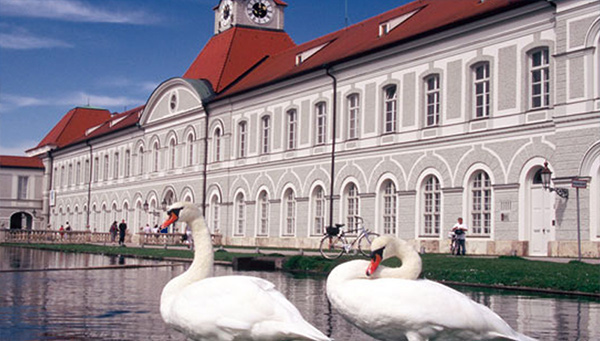
Festive concert
Program follows
The Nymphenburg Palace was the birthplace of the fairy tale king Ludwig II, here he spent his childhood. The 7-year-old Wolfgang Amadeus Mozart and his sister Nannerl gave a concert here in the castle with great success.
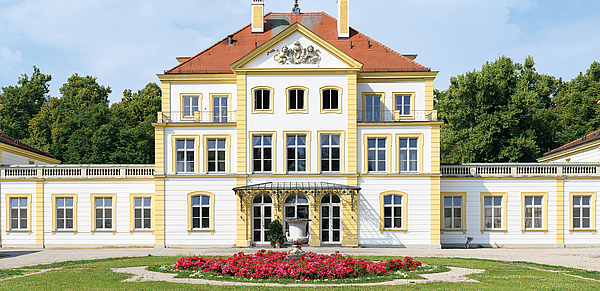
Concert in Fürstenried Palace
program follows
Die neue Konzertreihe auf Schloss Fürstenried findet einmal im Monat sonntags vormittags als Matinée im Goldenen Saal des Schlosses statt. Das ehemalige Jagdschloss der bayerischen Herrscher, zuletzt Wohnsitz von König Otto I., ist nicht öffentlich zugänglich. In Verbindung mit einem ca. 80 minüten Konzert der Residenz-Solisten können Besucher einen Einblick in die schöne Schlossanlage bekommen. Im Sommer finden die Konzerte abends in einem ganz besonderen Ambiente im Schlosspark statt. Virtuose Melodien und gern gehörte Klassiker gespielt von den Residenz-Solisten machen dieses Konzert zu einem Erlebnis der besonderen Art.
Nach dem Konzert gibt es die Möglichkeit einen Lunch im Schloss einzunehmen. Dieser ist optional zubuchbar.
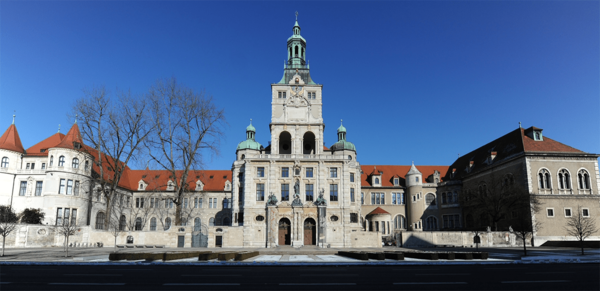
Classical music in museum Open Air
Program follows
The concert series "Classical music in the museum" combines an 60 minutes concert by the Residence Soloists and the museum entrance.
Festive concert
Program follows
The Nymphenburg Palace was the birthplace of the fairy tale king Ludwig II, here he spent his childhood. The 7-year-old Wolfgang Amadeus Mozart and his sister Nannerl gave a concert here in the castle with great success.
Classical music in museum Open Air
Program follows
The concert series "Classical music in the museum" combines an 60 minutes concert by the Residence Soloists and the museum entrance.
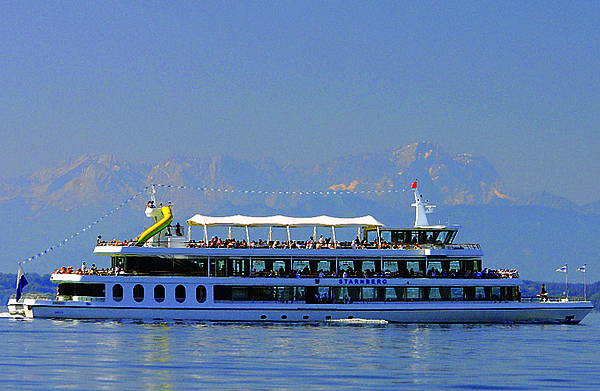
Royal water music
A truly special boat trip
Departure 6:30 PM - Starnberg Arrival 10:00 PM - Starnberg
Enjoy a sparkling wine reception and a delicious 3-course meal including beverages.
Menu
Appetizer:
Vitello Tonnato, 1 prawn, antipasti, bruschetta, melon with prosciutto, smoked salmon
Main Course:
Veal shoulder, Schilcher wine sauce, fresh market vegetables, potato gratin
Vegetarian:
Cannelloni with ricotta and spinach filling, tomato sauce, basil
Dessert:
Quark strudel with vanilla sauce
Vegetarian and special allergen-free menus are available upon request up to one month prior to departure.
The team of Bavaria Klassik welcomes his guests on board of the luxury ship MS Starnberg on the Starnberger lake. Be King for a day and discover the ancient stories of the lake and the palaces.
MS STARNBERG offers you the possibility to celebrate like the Bavarian kings.
In the middle of the evening is the „royal water music“ which takes place in the excellent acoustics of the salon on the main deck. The residence soloists with members of the Munich members of a philharmonic orchestra play masterpieces of composers like Vivaldi, Händel, Corelli and Mozart, musician, which have already been beloved and promoted by the royal family.
You will be welcome with a secco glass and will enjoy a 3 courses dinner(drinks included)
At the end you can enjoy fireworks over the sea! Come on board!
Vegetarian menu only on pre-order ! Special allergenfree Menus on request until one month before departure.
Departure: 18:30 Starnberg Arrival: 22:00 Starnberg
