Residence-Soloists- NEWS (Please klick downstairs)
Give the gift of unforgettable musical experiences - also available as an e-ticket.
Please change your selection or click Deselect.
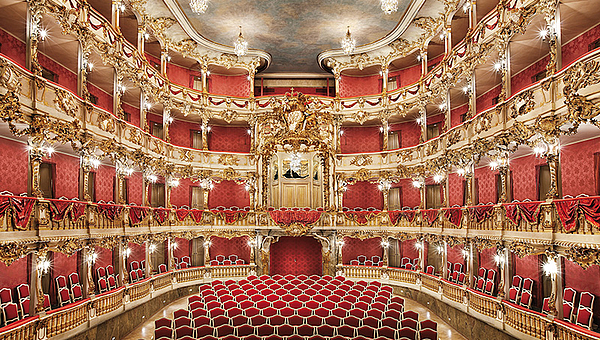
Castle Nymphenburg - Johannissaal
Mozart: Piano Sonata No. 13 in B-flat major, K. 332
Chopin: Scherzo No. 2 in B-flat major, Op. 31
Brahms: Piano Sonata No. 1 in F minor, Op. 5
Resident Soloist: Anton Bondarenko – Piano
This concert series serves as a tribute to Mozart, who gave a concert with his sister Nannerl in Nymphenburg Palace with Elector Maximilian III when he was seven years old and this went down in history.
Wolfgang Amadeus Mozart – Piano Sonata No. 13 in B-flat major, K. 332
This sonata is part of Mozart’s mature middle-period keyboard works, composed around 1778. The first movement features lively thematic development, rhythmic clarity, and classical formal balance. The Andante offers lyrical calm, delicate melodic lines, and subtle expressive nuance, while the final Allegro vivace combines sparkling virtuosity with contrasting figurations, bringing the work to a playful, energetic close. The blend of melodic beauty, structural precision, and pianistic inventiveness makes this sonata a highlight of the Mozart repertoire.
Frédéric Chopin – Scherzo No. 2 in B-flat major, Op. 31
Chopin’s Second Scherzo exemplifies his ability to merge dramatic intensity with lyrical sensitivity. The opening section unfolds stormy, powerful gestures, while the middle section contrasts with singing melodies and expressive calm. Rhythmic sophistication, unexpected harmonic turns, and virtuosic passages present both a technical and interpretive challenge. Despite the “Scherzo” title, the piece conveys deep emotional and poetic intensity.
Johannes Brahms – Piano Sonata No. 1 in F minor, Op. 5
Brahms’ First Piano Sonata, composed in 1853, is one of the most powerful and expressive works of his early period. The first movement impresses with heroic drama, dense motivic development, and energetic rhythms. The Adagio reveals intimate lyricism and profound poetic reflection, while the finale combines virtuosic runs, dramatic tension, and triumphant gestures to bring the sonata to an emotionally compelling conclusion. The work unites technical brilliance with rich musical language and remains a cornerstone of Romantic piano literature.
Max-Joseph hall of the Munich Residence
Vivaldi: The Four Seasons – complete
Boccherini: Fandango & La Musica Notturna delle Strade di Madrid for Guitar & Strings
Albéniz: Asturias and other famous Spanish compositions for guitar
Mon-Fu Lee – violin
Leonard Becker – guitar
Residenz Soloists
Spanish–Italian Night – A Musical Evening of Sun and Passion
We begin in Baroque Venice, where the “Red Priest” Antonio Vivaldi made music history with his Four Seasons. He was a master at letting nature speak without a single word. A virtuoso violinist himself, he constantly pushed the boundaries of the instrument.
The Four Seasons are more than just beautiful melodies; they are an immersive experience that brings the renewal and drama of nature directly into the concert hall.
Isaac Albéniz – Asturias (Leyenda)
Although the title Asturias suggests the green landscapes of northern Spain, every note of the piece breathes the spirit of Andalusia in the south. Originally composed in 1892 for piano, the work later became an icon of Spanish music through its transcription for guitar—an instrument for which Albéniz seemed almost instinctively to write.
Albéniz originally titled the piece simply Leyenda (“Legend”)—a fitting name for a work that has become one of the most recognizable melodies in classical music worldwide.
Luigi Boccherini – La Musica Notturna delle Strade di Madrid
Imagine sitting by an open window on a warm summer night in the year 1780. Outside, in the winding streets of Madrid, a vibrant nocturnal life begins to unfold.
Luigi Boccherini, the Italian virtuoso living in Spanish exile, captured these fleeting moments in his String Quintet Op. 30 No. 6. He considered the piece so deeply connected to Spain that he believed its magic could hardly be understood anywhere else.
More than chamber music, this work is an acoustic painting that dissolves the boundary between the concert hall and the streets. It invites the listener into a world of shadows and light, filled with the irresistible rhythms of old Spain.
His famous Fandango was, in its time, almost a provocation of courtly etiquette. Boccherini brought the passionate and seductive folk dance of the streets into refined chamber music—often crowning it with the clattering rhythm of real castanets.
Bayerisches Nationalmuseum
Vivaldi: „Die vier Jahreszeiten“ - Ausschnitte
Boccherini: „Fandango“, „Madrid“ für Gitarre & Streicher
Albeniz: „Asturias“ und weitere berühmte spanische Kompositionen für Gitarre
Leonard Becker - Guitar & Resident-Solists
Spanish–Italian Afternoon – A Musical Afternoon Full of Sun and Passion ☀️?
We begin in Baroque Venice, where the “Red Priest,” Antonio Vivaldi, made music history with The Four Seasons. A master of musical storytelling, Vivaldi had the remarkable ability to let nature speak without a single word. A brilliant virtuoso, he pushed the technical limits of the violin and transformed the concerto into a vivid musical narrative. The Four Seasons is far more than a sequence of melodies—it is an immersive experience that brings the renewal and drama of nature directly into the concert hall.
Next comes Asturias (Leyenda) by Isaac Albéniz. Although the title refers to the green northern region of Spain, the music itself breathes the spirit of Andalusia in the south. Originally composed for piano in 1892, the piece achieved worldwide fame through its transcription for guitar—an instrument for which Albéniz often seemed to write instinctively. He originally titled the work simply Leyenda (“Legend”), a fitting name for a piece that has become one of the most recognizable melodies in classical music.
Finally, we encounter the secret masterpiece of Luigi Boccherini: La Musica Notturna delle Strade di Madrid. Imagine sitting by an open window on a warm summer night in Madrid around the year 1780. Outside, in the winding streets of the city, a vibrant nocturnal life unfolds. Boccherini—an Italian virtuoso living in Spain—captures these fleeting moments in his String Quintet, Op. 30 No. 6. He believed the work to be so closely tied to Spanish life that listeners outside Spain might never fully grasp its magic. More than chamber music, it is an acoustic painting that dissolves the boundary between the concert hall and the street, inviting the audience into a world of shadow, light, and the irresistible rhythms of old Madrid.
Within this work, the famous Fandango becomes almost a provocation against courtly etiquette. Boccherini boldly introduced the passionate and seductive folk dance of the streets into refined chamber music, often crowning it with the lively clatter of real castanets—an unforgettable fusion of elegance and fiery Spanish spirit
The Old Court Chapel
Variable program
Every Saturday you can expect a special cultural hallmark in the Munich Residence troughout the year. The Residence Soloists are performing in the Court Chapel (Hofkapelle) The historical atmosphere of the court chapel in which also Mozart was performing concerts lets you get in touch with the music of old times. You will find weekly changing performances with masterpieces ranging from Bach, Vivaldi, Haydn and Mozart.
Please notice: In summertimes the old court chapel is cool and in wintertimes it can be cold! Please wear warm clothes.
Schleissheim Palace
Beethoven: Violin Concerto in D Major
Paganini: La Campanella
Mozart: Symphony No. 38 “Prague”
Strauss II: Voices of Spring Waltz
Simon Zhu – solo violin & Residenz Soloists
A Night of Virtuosity and Viennese Elegance
In the magnificent stillness of Schloss Schleißheim, evening descends like a curtain of longing sound. Onto this stage steps Simon Zhu, a violinist of our time with the narrative power of the great masters. A recent highlight from his career reads like a moment for the history books: on 15 October 2024, the historic Guildhall in London became the setting for an extraordinary celebration. Marking the 120th anniversary of the London Symphony Orchestra, musical brilliance met the highest level of state honour.
At the center of the spotlight stood the young violinist Simon Zhu. Yet he was not alone. In his hands he held a legend: “Il Cannone.”
This Guarneri del Gesù violin from 1743 the “cannon” on which Niccolò Paganini once astonished the world, left its vault in Genoa especially for the occasion. That Simon Zhu was entrusted with this Italian national treasure is nothing short of a knightly accolade.Under the passionate baton of Sir Antonio Pappano, Zhu unleashed the soul of Il Cannone—before the eyes of a very special guest: King Charles III, who appeared unexpectedly to honour the LSO.
Mozart – Symphony No. 38 “Prague”
Mozart’s Symphony No. 38 is far more than a charming entertainment piece of the 18th century. It marks the transition to the composer’s late style—technically demanding, emotionally profound, and formally bold. It also reflects the special bond between Mozart and the Prague audience that adored him.
Vienna may have been reserved, but Prague was ablaze. When Mozart arrived in the city in 1787, he quickly realized he was a superstar.
“My Figaro is played everywhere here,” he wrote enthusiastically. As a gift for the city, he brought the Symphony KV 504 with him. During his stay, Mozart was rarely in his hotel—he was invited to so many balls and parties that composing almost became secondary. As he famously remarked
“Here nothing is spoken of but Figaro—played, sung, and whistled everywhere.”
Interestingly, Mozart omitted the traditional minuet movement entirely. Was he simply uninterested in courtly dancing? More likely, the symphony’s dramatic intensity and structural unity left no room for a relaxed ballroom interlude. The result: three movements of pure energy—Mozart’s musical love letter to a city that truly understood him.
Beethoven – Violin Concerto in D Major
For the grand culmination of the evening, we turn to Beethoven’s Violin Concerto.
Vienna, 1806: with five quiet timpani strokes—a musical heartbeat—Beethoven revolutionized the violin concerto. What begins like a gentle knock on the door of modernity unfolds into a vast symphonic drama.
Here the violin is not merely a virtuoso showpiece. It becomes a solitary, luminous voice floating above the waves of the orchestra.
From the meditative prayer of the slow movement to the ecstatic hunting dance of the finale, Beethoven demands everything: flawless technique and the philosophical depth of a thinker. The concerto balances between classical clarity and romantic passion—an artistic high-wire act that remains the Mount Everest of the violin repertoire.
Its premiere was itself a daring gamble. Because Beethoven finished the score at the last possible moment, the soloist Franz Clement reportedly had to perform much of his part almost sight-reading, with little rehearsal.
Despite this unusual beginning, the work has endured as one of the greatest masterpieces in music history—drawing listeners into its spell from the very first heartbeat of the timpani.
Castle Nymphenburg - Johannissaal
Mozart: Variations for Piano, KV 455
Schubert: Piano Sonata, D 958
Bach/Rachmaninov: Partita
Chopin: Étude, Op. 25, No. 11 “Winter Wind”
Balakirev: “Islamey”
This concert series serves as a tribute to Mozart, who gave a concert with his sister Nannerl in Nymphenburg Palace with Elector Maximilian III when he was seven years old and this went down in history.
Wolfgang Amadeus Mozart – Variations for Piano, K. 455
Mozart’s Variations KV 455, composed in 1784, exemplify his genius in transforming a simple theme into a series of imaginative and contrasting variations. Each variation explores new harmonic colors, rhythmic subtleties, and melodic surprises. The music combines playful lightness with elegant sophistication, offering both the performer and the audience a rich experience of expression, technique, and compositional finesse.
Franz Schubert – Piano Sonata, D 958
Schubert’s Sonata in C minor, D 958, was composed in 1828, during the final months of his life. The work is marked by deep emotional expression, lyrical beauty, and dramatic intensity. It juxtaposes melancholy, inner tension, and moments of brightness, making it one of the most significant works of late-Romantic piano literature. Schubert demonstrates his extraordinary ability to combine narrative depth with musical form.
Johann Sebastian Bach / Sergei Rachmaninov – Partita
In this interpretation, Bach’s Baroque clarity meets Rachmaninov’s Romantic expressiveness. The Partita unfolds contrapuntal structures, enriched by Rachmaninov’s harmonic colors, lyrical lines, and virtuosic passages. This fusion of two centuries of piano music offers a compelling perspective on form, style, and emotional depth.
Frédéric Chopin – Étude, Op. 25, No. 11 “Winter Wind”
Chopin’s “Winter Wind” Étude is a quintessential display of virtuosity and expressive power. Its swirling arpeggios and relentless momentum evoke the force and chill of a winter storm. The piece demands exceptional technical precision and rhythmic control while remaining deeply poetic, showcasing the intense drama of Romantic piano music.
Mily Balakirev – Islamey
Balakirev’s Islamey is one of the most virtuosic challenges in the piano repertoire. Inspired by Caucasian folk music, it combines fiery rhythms, rapid runs, and highly contrasting themes. Its energy, exotic colors, and technical extremes make Islamey a spectacular concert finale, highlighting the performer’s virtuosity and captivating the audience.
The Old Court Chapel
Variable program
Every Saturday you can expect a special cultural hallmark in the Munich Residence troughout the year. The Residence Soloists are performing in the Court Chapel (Hofkapelle) The historical atmosphere of the court chapel in which also Mozart was performing concerts lets you get in touch with the music of old times. You will find weekly changing performances with masterpieces ranging from Bach, Vivaldi, Haydn and Mozart.
Please notice: In summertimes the old court chapel is cool and in wintertimes it can be cold! Please wear warm clothes.
Castle Nymphenburg - Johannissaal
Mozart: Piano Sonata, K. 570
Granados: Goyescas I. Los Requiebros
Chopin: Étude, Op. 25, No. 11 “Winter Wind”
Schumann: Kreisleriana Op.16
Jielei Wang – Resident Soloist, Piano
This concert series serves as a tribute to Mozart, who gave a concert with his sister Nannerl in Nymphenburg Palace with Elector Maximilian III when he was seven years old and this went down in history.
Wolfgang Amadeus Mozart – Piano Sonata, K. 570
Mozart’s Piano Sonata in B-flat major, K. 570, composed in 1789, represents the mature clarity and elegance of his late Classical style. Its flowing melodies, balanced structures, and refined harmonic language create a sense of serene sophistication. The sonata combines lyricism with subtle rhythmic vitality, allowing the performer to explore both expressive nuance and precise articulation, showcasing Mozart’s mastery of form and charm.
Robert Schumann – Kreisleriana, Op. 16
Schumann’s Kreisleriana is a tour de force of Romantic piano writing, inspired by the eccentric literary character Johannes Kreisler. Composed in 1838, it alternates between passionate, stormy episodes and delicate, whimsical passages. The work’s dramatic contrasts and emotional intensity reflect Schumann’s imaginative spirit, inviting the listener into a deeply personal and expressive musical world.
Frédéric Chopin – Étude, Op. 25, No. 11 “Winter Wind”
Chopin’s “Winter Wind” Étude is a virtuosic masterpiece of technique and expression. Its swirling arpeggios, relentless momentum, and dramatic contrasts evoke the force and chill of a stormy winter. Beyond its technical demands, the piece conveys an intense emotional narrative, making it a quintessential example of Romantic pianism.
Enrique Granados – Los Requiebros
Granados’ Los Requiebros from Goyescas evokes the spirit of Spanish dance and song with rich melodic invention and rhythmic vitality. The piece is vibrant, sensuous, and full of expressive nuance, offering the performer opportunities to showcase both lyrical elegance and rhythmic flair, while immersing the listener in Granados’ uniquely Spanish musical world.
The Old Court Chapel
Variable program
Every Saturday you can expect a special cultural hallmark in the Munich Residence troughout the year. The Residence Soloists are performing in the Court Chapel (Hofkapelle) The historical atmosphere of the court chapel in which also Mozart was performing concerts lets you get in touch with the music of old times. You will find weekly changing performances with masterpieces ranging from Bach, Vivaldi, Haydn and Mozart.
Please notice: In summertimes the old court chapel is cool and in wintertimes it can be cold! Please wear warm clothes.
Max-Joseph hall of the Munich Residence
Mozart: Serenade Eine kleine Nachtmusik
Tchaikovsky: Serenade for Strings – Allegro & Waltz
Mendelssohn: A Midsummer Night’s Dream – Suite
Rossini: String Serenade
Brahms: Hungarian Dance
Johann Strauss II: Waltz On the Beautiful Blue Danube
Residenz Soloists
Summer Serenade at the Residenz
When the June evening sun bathes the façades of the Munich Residenz in warm gold and the Max-Joseph Hall glows softly beneath the light of its chandeliers, it is time for a Summer Serenade. This concert does more than simply present a sequence of works—it allows moods to flow seamlessly, from classical clarity to romantic warmth, from graceful dance to the sparkling joie de vivre of Vienna.
The evening opens with Wolfgang Amadeus Mozart’s serenade Eine kleine Nachtmusik, that enduring masterpiece which for centuries has shone like a musical emblem of the Viennese Classical style. From the very first striking chords of the Allegro, the atmosphere is set: buoyant precision, crystalline clarity, and a play of light and shadow that unfolds into tender lyricism in the singing middle movements. Here the art of the serenade reveals itself as cheerful evening music—yet far from superficial. Instead, it is a finely crafted miniature of elegance and balance.
With Pyotr Ilyich Tchaikovsky’s Serenade for Strings—a composer sometimes affectionately called the “Russian Mozart”—the musical color shifts toward the late Romantic world. The Allegro, written in homage to Mozart, unfolds with passion and breadth, infused with that unmistakable Russian melancholy that lends even lively passages a touch of longing. The following Waltz swirls gracefully through the hall—light, elegant, and shimmering with radiant string textures that seem almost to set the audience in motion. It is a dance between noble refinement and emotional depth.
Felix Mendelssohn Bartholdy’s suite from A Midsummer Night’s Dream leads us into a realm of fluttering fairies, nocturnal confusions, and poetic enchantment. Inspired by Shakespeare’s comedy, the music paints a sonic landscape of magical lightness with silvery lines and sparkling rhythms. Yet beneath the delicate charm there remains a hint of Romantic irony, as if one were listening to a dream slowly dissolving with the arrival of dawn.
Gioacchino Rossini’s String Serenade brings Italian brilliance to the program. With playful elegance and sparkling virtuosity, the melodies unfold in graceful arcs. Rossini’s instinct for theatrical effect is unmistakable—even without a stage, the music becomes a lively drama of tension, wit, and smiling exuberance.
For the glittering finale, Johann Strauss II’s waltz On the Beautiful Blue Danube fills the hall. Few works evoke the spirit of the 19th century so vividly: floating triple rhythms and a melody that rises wide and radiant through the air. Like a musical firework, the waltz unfolds in festive splendor, illuminating the summer evening and sending the audience out into the night with lightness and joy.