
Please change your selection or click Deselect.
Castle Nymphenburg - Johannissaal
Wolfgang Amadeus Mozart: Piano Sonata No. 9 in A minor, K. 310
Johannes Brahms: Piano Pieces, Op. 11
Ravel: Klavierstücke: „Menuet sur le nom D‘Haydn“ & „A la maniere de Borodine“ & „À la manière de Emmanuel Chabrier“
Frédéric Chopin: Polonaise in A-flat major, Op. 53
Resident Soloist: Yunling Keng – Piano
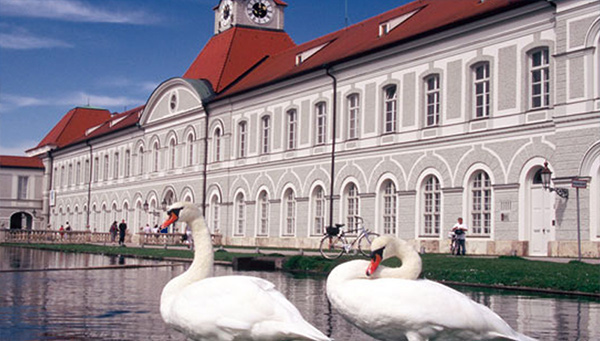
This concert series serves as a tribute to Mozart, who gave a concert with his sister Nannerl in Nymphenburg Palace to Elector Maximilian III when Mozart was only seven years old and thus went down in history.
Wolfgang Amadeus Mozart – Piano Sonata No. 9 in A minor, K. 310
This sonata is one of Mozart’s most dramatic keyboard works and one of the few he composed in a minor key. Written in Paris in 1778 during a difficult period of his life, it reveals an unusual intensity of expression. The turbulent first movement contrasts with the lyrical and introspective Andante, while the energetic finale combines virtuosity with a sense of restless drive.
Johannes Brahms – Scherzo in E-flat minor for Piano, Op. 4
This powerful early work shows the young Brahms at his most passionate and virtuosic. The Scherzo features bold rhythms, dramatic contrasts, and sweeping pianistic textures. Despite its youthful intensity, the piece already displays Brahms’s characteristic structural strength and rich harmonic language.
Maurice Ravel – Menuet sur le nom d’Haydn & À la manière de Borodine
These two short pieces reveal Ravel’s refined sense of musical style and wit. The Menuet sur le nom d’Haydn was written as a tribute to Joseph Haydn, transforming the composer’s name into a musical motif. In À la manière de Borodine, Ravel playfully evokes the style of Alexander Borodin, creating a charming and elegant homage.
Frédéric Chopin – Polonaise in A-flat major, Op. 53 (“Heroic”)
One of Chopin’s most celebrated piano works, this Polonaise combines grandeur, virtuosity, and powerful rhythmic drive. The distinctive rhythm of the Polish national dance is transformed into a brilliant and heroic musical statement. With its sweeping gestures and orchestral sonority, the piece stands as a symbol of Romantic pianistic brilliance.
Bayerisches Nationalmuseum
Mozart: Klaviersonate Nr. 9, KV 310
Brahms: Klavierstücke op. 118
Ravel: Klavierstücke: „Menuet sur le nom D‘Haydn“ & „A la maniere de Borodine“
Chopin: Polonaise, op. 53
Residenz-Solistin: Yunling Keng - Klavier
In the historic Mars–Venus Hall of the National Museum, an audience gathers in search of silence, concentration, and the atmosphere of a historic space. Here, surrounded by sculptures and classical ornamentation, a piano recital unfolds that ranges from the elegance of Mozart to the expressive drama of Chopin—an evening in the spirit of the great salon tradition, intimate yet marked by remarkable virtuosity.
The program opens with Piano Sonata No. 9, K. 310 by Wolfgang Amadeus Mozart. Its sparkling clarity, lightness, and elegance fill the room while creating a sense of intimate connection with the listener.
In the Piano Pieces, Op. 118 by Johannes Brahms, another dimension emerges. Thoughtful melancholy, harmonic depth, and subtle rhythmic nuances shape these miniatures. Moments of quiet intensity arise, drawing the audience into a world of introspection and reflection.
With “Menuet sur le nom d’Haydn” and “À la manière de Borodine” by Maurice Ravel, French refinement and a touch of exotic color enter the program. Delicately shaded timbres, precise articulation, and sensitivity to stylistic allusions allow the music to sound like a dialogue across centuries.
The recital concludes with the Polonaise in A-flat major, Op. 53 by Frédéric Chopin—heroic, brilliant, and full of fire. Every chord and sweeping octave passage becomes a gesture of power and intensity.
Thus, the piano recital in the Mars–Venus Hall becomes a journey through musical worlds and eras. Mozart, Brahms, Ravel, and Chopin enter into a subtle dialogue, brought to life by the pianist Yunling Keng, who fills the historic setting of the museum with vibrant musical expression.
Castle Nymphenburg - Johannissaal
Wolfgang Amadeus Mozart – Rondo in D major, K. 485
Johann Sebastian Bach – Partita No. 1 in B-flat major, BWV 825
Frédéric Chopin – 24 Preludes, Op. 28
Resident Soloist: Haruka Ogawa – Piano
This concert series serves as a tribute to Mozart, who gave a concert with his sister Nannerl in Nymphenburg Palace with Elector Maximilian III when he was seven years old and thus went down in history.
Wolfgang Amadeus Mozart – Rondo, K. 485
Mozart’s Rondo in A minor, K. 485, composed in 1786, is a work of both elegance and expressive depth. Characterized by its lively themes and subtle contrasts, the piece blends playful charm with dramatic intensity. The recurring rondo theme provides a unifying thread, while each contrasting episode allows the performer to explore different colors, textures, and emotional nuances. Mozart’s clarity of form and melodic invention make this Rondo a masterclass in Classical style, balancing brilliance with expressive refinement.
Johann Sebastian Bach – Partita, BWV 825
Bach’s Partita No. 1 in B-flat major, BWV 825, opens the door to the intricate world of Baroque keyboard music. Each movement—allemande, courante, sarabande, and gigue—reveals the contrapuntal genius and rhythmic vitality for which Bach is renowned. The Partita demands precision and clarity, yet within its formal rigor lies expressive depth, as the performer navigates delicate ornamentation, harmonic exploration, and the lyrical interplay of voices. This work stands as a bridge between intellectual structure and expressive musical storytelling.
Frédéric Chopin – 24 Préludes, Op. 28
Chopin’s 24 Préludes, Op. 28, composed between 1835 and 1839, are miniature masterpieces that span the full spectrum of emotion and pianistic color. Each Prelude, though brief, offers a self-contained world of harmonic and melodic invention, ranging from lyrical intimacy to dramatic intensity. The cycle as a whole provides a panorama of Romantic expression, highlighting Chopin’s mastery of pianistic technique, nuanced touch, and emotional depth. The Préludes invite the performer to explore a variety of moods, textures, and expressive possibilities, making the set both a technical and interpretive journey.
Castle Nymphenburg - Johannissaal
Bach: Prelude and Fugue in G minor, BWV 874
Mozart: Piano Sonata No. 14 in C minor, K. 457
Prokofiev: Sonata in B-flat major, Op. 84
Resident Soloist: Chanyeon Jung – Piano
This concert series serves as a tribute to Mozart, who gave a concert with his sister Nannerl in Nymphenburg Palace for Elector Maximilian III when Mozart was seven years old and thus went down in history.
Johann Sebastian Bach – Prelude and Fugue, BWV 874
Bach’s Prelude and Fugue from The Well-Tempered Clavier, Book II, BWV 874, exemplifies his mastery of counterpoint. The Prelude opens with clear, flowing motifs that are both harmonically rich and rhythmically fluid, while the subsequent Fugue showcases the complexity of Bach’s polyphonic writing. Each voice develops independently yet remains perfectly intertwined, creating a tapestry of sound that demands precision, clarity, and deep musical understanding from the performer. The work invites the listener to explore the expressive potential of Baroque keyboard music.
Wolfgang Amadeus Mozart – Piano Sonata, K. 457
Mozart’s Piano Sonata in C minor, K. 457, composed in 1784, is one of his most emotionally intense sonatas. The first movement is charged with drama and tension, unusual for the Classical period, while the second movement offers lyrical warmth and subtle nuance. The final movement returns to vitality and rhythmic energy, completing the emotional arc of the work. This sonata perfectly balances Classical formal clarity with expressive depth, demonstrating Mozart’s extraordinary ability to translate inner conflict and emotion into music.
Sergei Prokofiev – Sonata in B-flat major, Op. 84
Prokofiev’s Sonata in B-flat major, Op. 84, composed in 1944, is a landmark of modern piano repertoire. It combines clear formal structures, rhythmic precision, and daring harmonic language, interweaving lyrical passages with virtuosic, often impulsive outbursts. Prokofiev’s characteristic mix of irony, drama, and melancholy requires both technical brilliance and interpretive insight. The sonata reflects a period of upheaval while opening a fascinating window into 20th-century piano music.
Cuvilliés Theatre
Beethoven: Piano Concerto No. 4 in G major
Mozart: Symphony No. 41 in C major
Mozart: Overture from The Magic Flute
Chaewon Kim – piano & Residence-Soloists
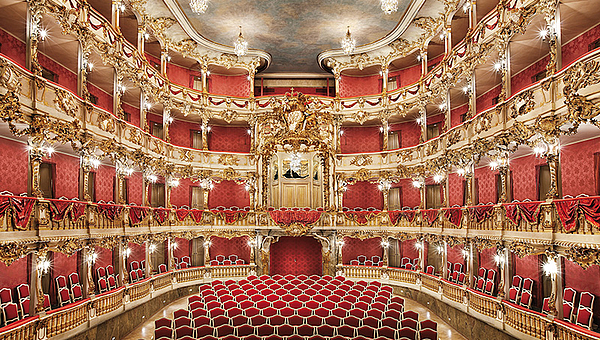
An evening full of highlights from the Viennese Classical era awaits the audience in the magnificent Cuvilliés Theatre. The programme brings together Beethoven’s subtle inner dialogue with Mozart’s majestic symphonic brilliance.
The festive opening is set by the overture from The Magic Flute by Wolfgang Amadeus Mozart. It begins with a blend of ceremonial energy and mysterious tension, preparing the listener for the colourful yet profound world of the opera.
In Piano Concerto No. 4 in G major by Ludwig van Beethoven, the piano does not appear as a brilliant soloist alone but as a sensitive partner to the accompanying ensemble. The first movement opens unusually: the piano begins quietly and reflectively, gradually inviting the orchestra into its dialogue. The second movement unfolds in a lyrical, almost song-like mood, before the lively third-movement rondo lifts the listener with brightness and energy, releasing them from the calm of the middle sections.
Next comes Symphony No. 41 in C major by Wolfgang Amadeus Mozart, Mozart’s last and greatest symphony. With monumental clarity and a stunning balance of grandeur and delicate detail, it is at once majestic and playful. The final movement, in which five themes are intricately interwoven, showcases Mozart’s genius in contrapuntal mastery and allows the audience to experience the pure joy and lightness of Viennese Classicism.
An evening celebrating classical music in all its radiance, elegance, and vitality – a feast for both eyes and ears alike.
Castle Nymphenburg - Johannissaal
Mozart – Variations for Piano, K. 398
Beethoven – Piano Sonata No. 23 in F minor, Op. 57 “Appassionata”
Schumann – Humoreske, Op. 20
Resident Soloist: So Hyang In – Piano
This concert series serves as a tribute to Mozart, who gave a concert with his sister Nannerl in Nymphenburg Palace for Elector Maximilian III when Mozart was only seven years old and thus went down in history.
Wolfgang Amadeus Mozart – Variations for Piano, K. 398
Mozart’s K. 398, also known as the “12 Variations on a Minuet Theme”, showcases his mastery of the variation form. From a simple, charming theme, a series of variations unfolds, combining technical brilliance with subtle expressive nuance. Each variation introduces new rhythmic, melodic, and harmonic ideas, ranging from delicate, lyrical passages to sparkling virtuoso figurations. While the work retains a playful elegance, it also reveals Mozart’s characteristic depth and refined artistry.
Ludwig van Beethoven – Piano Sonata No. 23 in F minor, Op. 57 “Appassionata”
The Appassionata is one of Beethoven’s most emotionally intense sonatas. The first movement is marked by stormy drama and powerful contrasts; the Adagio conveys profound melancholy, and the finale combines rhythmic drive with a sense of unstoppable momentum. Beethoven employs dynamic extremes, expressive harmonies, and motivic development to create a sweeping arc of tension and release, captivating both performer and listener. This sonata remains a cornerstone of Romantic expression within the classical sonata structure.
Robert Schumann – Humoreske, Op. 20
Schumann’s Humoreske is a kaleidoscope of moods and expressive contrasts. The music shifts between reflective lyricism, playful wit, and impulsive drama. The work demands both emotional sensitivity and technical finesse, as it flows from tender melodies to rhythmic ingenuity and virtuosic passages. Through the Humoreske, Schumann demonstrates his extraordinary ability to convey complex emotional landscapes in concise, nuanced piano writing.
Castle Nymphenburg - Johannissaal
Mozart: Piano Sonata No. 12 in F major, K. 282
Debussy: Images I for Piano
Chopin: Two Nocturnes, Op. 32
Janáček: Sonata 1. X. 1905
Resident Soloist: Luis González – Piano
This concert series serves as a tribute to Mozart, who gave a concert with his sister Nannerl in Nymphenburg Palace with Elector Maximilian III when he was seven years old and thus went down in history.
Wolfgang Amadeus Mozart – Piano Sonata No. 12 in F major, K. 282
Composed in 1774 during Mozart’s middle period, this sonata exemplifies his clarity, elegance, and formal balance. The first movement features lively thematic development and precise rhythms, while the Andante offers lyrical calm and expressive nuance. The final Presto combines playful virtuosity with rhythmic vitality, bringing the work to an energetic close. Throughout, Mozart demonstrates how technical finesse, elegance, and musical clarity can merge into a harmonious whole.
Claude Debussy – Images I for Piano
Debussy’s Images I opens an impressionistic sound world rich in color and atmosphere. Each piece creates its own sonic landscape: from radiant transparency to flowing, impressionistic motion and to mysterious, shadowy textures. Using innovative harmonies, subtle rhythmic shifts, and delicate dynamic shading, Debussy evokes poetic moods and painterly imagery, transforming the piano into a canvas of sound.
Frédéric Chopin – Two Nocturnes, Op. 32
Chopin’s Nocturnes combine singing melodic lines with refined expressive depth. The melodies flow like intimate vocalizations, supported by gentle harmonies, while rubato and nuanced dynamics enhance emotional subtlety. Each Nocturne functions as a miniature poetic portrait, conveying moods of longing, contemplation, and quiet introspection in a concentrated musical form.
Leoš Janáček – Sonata 1. X. 1905
Janáček’s Sonata commemorates the tragic events of “Bloody Sunday” in Brno (October 1, 1905) and stands as a testament to his expressive intensity. The work combines sharp rhythms, powerful thematic material, and folk-inspired motifs to create an emotionally charged narrative. Turbulent, stormy passages alternate with lyrical, reflective moments, resulting in a sonata that conveys both historical drama and Janáček’s deeply personal musical voice.
Allerheiligen-Hofkirche of the Munich Residence
Johann Sebastian Bach: Piano Concerto No. 1 in D minor, BWV 1052
Johann Sebastian Bach: Piano Concerto No. 2 in E major, BWV 1053
Johann Sebastian Bach: Piano Concerto No. 3 in D major, BWV 1054
Johann Sebastian Bach: Piano Concerto No. 4 in A major, BWV 1055
Johann Sebastian Bach: Piano Concerto No. 5 in F minor, BWV 1056
Collins Tanujaya, Dongqi Zhang, Naoe Sasaki, Carles Díaz Morros, Rezi Marshania – piano
& Residenz-Solisten
On this festive occasion, the All Saints’ Court Church Allerheiligen Hofkirche glows in the warm light of candles, opening its venerable spaces for an extraordinary musical experience: the five great Bach piano concertos, masterfully performed by Collins Tanujaya, Dongqi Zhang, Naoe Sasaki, Carles Díaz Morros, and Rezi Marshania, accompanied by the Residenz-Solisten.
Bach’s Piano Concerto No. 1 in D minor, BWV 1052 is considered one of the most powerful and technically demanding works of Baroque music. Originally likely conceived as a violin concerto, it captivates with dramatic energy and a virtuosity that feels strikingly modern.
In contrast, the Piano Concerto No. 2 in E major, BWV 1053 is brighter, more pastoral, and relaxed. It is a prime example of Bach’s masterful parody technique, featuring luminous, dance-like character, buoyant rhythms, and elegant melodies that refresh the senses.
Majestic and radiant, Piano Concerto No. 3 in D major, BWV 1054 is a transcription of Bach’s famous Violin Concerto in E major (BWV 1042). Bach likely created this version between 1738 and 1739 for the concerts of the Collegium Musicum in Leipzig, where he himself performed the solo part on the harpsichord. Its splendid harmonies and dynamic contrasts fill the hall with energy.
The elegant Piano Concerto No. 4 in A major, BWV 1055 is one of Bach’s most radiant and lively works for keyboard. It impresses with subtle counterpoint and sparkling piano passages that artfully complement the strings.
The crowning conclusion is Piano Concerto No. 5 in F minor, BWV 1056, whose passionate drama and poetic delicacy linger long after the final note.
In the intimate atmosphere of candlelight, music, light, and historic architecture merge into an unforgettable experience. Every note becomes a treasure, every phrase an invitation to immerse oneself fully in Bach’s world of sound.
Castle Nymphenburg - Johannissaal
Mozart: Piano Sonata No. 13 in B-flat major, K. 332
Chopin: Scherzo No. 2 in B-flat major, Op. 31
Brahms: Piano Sonata No. 1 in F minor, Op. 5
Resident Soloist: Anton Bondarenko – Piano
This concert series serves as a tribute to Mozart, who gave a concert with his sister Nannerl in Nymphenburg Palace with Elector Maximilian III when he was seven years old and this went down in history.
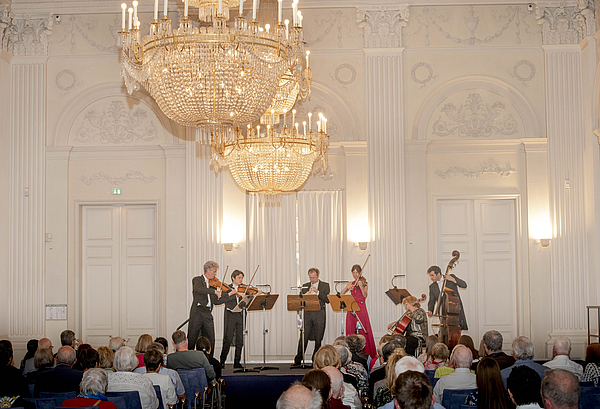
Wolfgang Amadeus Mozart – Piano Sonata No. 13 in B-flat major, K. 332
This sonata is part of Mozart’s mature middle-period keyboard works, composed around 1778. The first movement features lively thematic development, rhythmic clarity, and classical formal balance. The Andante offers lyrical calm, delicate melodic lines, and subtle expressive nuance, while the final Allegro vivace combines sparkling virtuosity with contrasting figurations, bringing the work to a playful, energetic close. The blend of melodic beauty, structural precision, and pianistic inventiveness makes this sonata a highlight of the Mozart repertoire.
Frédéric Chopin – Scherzo No. 2 in B-flat major, Op. 31
Chopin’s Second Scherzo exemplifies his ability to merge dramatic intensity with lyrical sensitivity. The opening section unfolds stormy, powerful gestures, while the middle section contrasts with singing melodies and expressive calm. Rhythmic sophistication, unexpected harmonic turns, and virtuosic passages present both a technical and interpretive challenge. Despite the “Scherzo” title, the piece conveys deep emotional and poetic intensity.
Johannes Brahms – Piano Sonata No. 1 in F minor, Op. 5
Brahms’ First Piano Sonata, composed in 1853, is one of the most powerful and expressive works of his early period. The first movement impresses with heroic drama, dense motivic development, and energetic rhythms. The Adagio reveals intimate lyricism and profound poetic reflection, while the finale combines virtuosic runs, dramatic tension, and triumphant gestures to bring the sonata to an emotionally compelling conclusion. The work unites technical brilliance with rich musical language and remains a cornerstone of Romantic piano literature.
Castle Nymphenburg - Johannissaal
Mozart: Variations for Piano, KV 455
Schubert: Piano Sonata, D 958
Bach/Rachmaninov: Partita
Chopin: Étude, Op. 25, No. 11 “Winter Wind”
Balakirev: “Islamey”
This concert series serves as a tribute to Mozart, who gave a concert with his sister Nannerl in Nymphenburg Palace with Elector Maximilian III when he was seven years old and this went down in history.
Wolfgang Amadeus Mozart – Variations for Piano, K. 455
Mozart’s Variations KV 455, composed in 1784, exemplify his genius in transforming a simple theme into a series of imaginative and contrasting variations. Each variation explores new harmonic colors, rhythmic subtleties, and melodic surprises. The music combines playful lightness with elegant sophistication, offering both the performer and the audience a rich experience of expression, technique, and compositional finesse.
Franz Schubert – Piano Sonata, D 958
Schubert’s Sonata in C minor, D 958, was composed in 1828, during the final months of his life. The work is marked by deep emotional expression, lyrical beauty, and dramatic intensity. It juxtaposes melancholy, inner tension, and moments of brightness, making it one of the most significant works of late-Romantic piano literature. Schubert demonstrates his extraordinary ability to combine narrative depth with musical form.
Johann Sebastian Bach / Sergei Rachmaninov – Partita
In this interpretation, Bach’s Baroque clarity meets Rachmaninov’s Romantic expressiveness. The Partita unfolds contrapuntal structures, enriched by Rachmaninov’s harmonic colors, lyrical lines, and virtuosic passages. This fusion of two centuries of piano music offers a compelling perspective on form, style, and emotional depth.
Frédéric Chopin – Étude, Op. 25, No. 11 “Winter Wind”
Chopin’s “Winter Wind” Étude is a quintessential display of virtuosity and expressive power. Its swirling arpeggios and relentless momentum evoke the force and chill of a winter storm. The piece demands exceptional technical precision and rhythmic control while remaining deeply poetic, showcasing the intense drama of Romantic piano music.
Mily Balakirev – Islamey
Balakirev’s Islamey is one of the most virtuosic challenges in the piano repertoire. Inspired by Caucasian folk music, it combines fiery rhythms, rapid runs, and highly contrasting themes. Its energy, exotic colors, and technical extremes make Islamey a spectacular concert finale, highlighting the performer’s virtuosity and captivating the audience.
