


Festive concert
Vivaldi: The Four Seasons
Mozart: Serenade Eine kleine Nachtmusik
Rossini: String Serenade in C Major & “Aria of Figaro”
Brahms: Hungarian Dance No. 6
Simon Zhu *- violin & Residenz Soloists
* 1.Pricewinner Premio Paganini Genoa 2023
Following this achievement, he performed for King Charles III on the famous “Cannone” by Guarneri del Gesù.
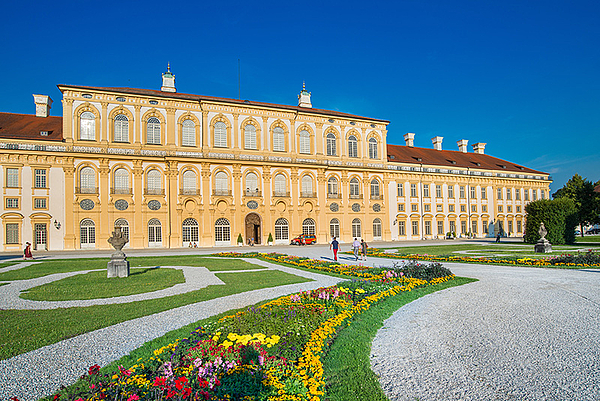
A summer festival concert at Schleißheim Palace: the evening air lies gently over the baroque façades, the sky stretches wide above the garden parterre, and even before the first note is played, the scene itself seems to breathe music. In this radiant setting, Antonio Vivaldi’s Le quattro stagioni unfolds.
When Vivaldi published these concertos in 1725, he created more than agreeable Baroque music—he designed a living theater of nature. In Spring, the violins chirp like excited birds, streams murmur in flowing lines, everything seems to bloom. Yet the idyll is not without interruption: a brief thunderstorm sweeps through, tremolos flashing like lightning across the orchestra. In the second movement, the shepherd rests, dreamily sketched by the solo violin, while the viola with dry, repeated notes imitates the “barking dog”—a charming detail that sharpens the imagery with a wink.
Summer lays a heavy weight on the shoulders. In the accompanying sonnets, Vivaldi explains: the cuckoo calls, the turtledove responds, a gentle wind stirs. Beneath the surface, tension grows. Finally, the storm breaks, unleashed and dramatic, as if the heavens themselves discharge over the palace gardens.
Autumn celebrates the harvest. Dance rhythms stomp, wine flows freely, the violins laugh. Merriment and good wine lull the peasants to sleep. During the hunt, gunshots ring out while the fleeing game is musically depicted in fast runs by the solo violin.
Winter finally cuts sharply through the summer warmth of this evening. The strings make the teeth chatter, rapid repetitions freeze the air. Footsteps crunch on ice, skaters glide—and fall. Yet even here, there is beauty in frost, a clear, sparkling transparency.
A change of scene: Wolfgang Amadeus Mozart’s Eine kleine Nachtmusik begins, seemingly made for such an open-air evening. Perhaps originally composed for a summer gathering, it now epitomizes classical cheerfulness. The themes are radiant, the elegance effortless. That a movement of the serenade is lost makes it a fragment—but one that feels complete.
Italian temperament enters with Gioachino Rossini. His string serenade bursts with energy, and in the “Aria of Figaro” from The Barber of Seville, the music races along in breathless tempo. Wit, virtuosity, and exuberant joy combine into a musical firework that sets even the palace walls vibrating.
On this summer evening at Schleißheim Palace, a panorama of the seasons and moods unfolds—nature, theater, and musical storytelling blending into a vivid, unforgettable experience.
Festive concert
Vivaldi: The Four Seasons
Mozart: Serenade Eine kleine Nachtmusik
Rossini: String Serenade in C Major & “Aria of Figaro”
Brahms: Hungarian Dance No. 6
Simon Zhu *- violin & Residenz Soloists
*1st Prize at the Premio Paganini in Genoa 2023. Following this achievement, he performed for King Charles III on the famous “Cannone” by Guarneri del Gesù.
A summer festival concert at Schleißheim Palace: the evening air lies gently over the baroque façades, the sky stretches wide above the garden parterre, and even before the first note is played, the scene itself seems to breathe music. In this radiant setting, Antonio Vivaldi’s Le quattro stagioni unfolds.
When Vivaldi published these concertos in 1725, he created more than agreeable Baroque music—he designed a living theater of nature. In Spring, the violins chirp like excited birds, streams murmur in flowing lines, everything seems to bloom. Yet the idyll is not without interruption: a brief thunderstorm sweeps through, tremolos flashing like lightning across the orchestra. In the second movement, the shepherd rests, dreamily sketched by the solo violin, while the viola with dry, repeated notes imitates the “barking dog”—a charming detail that sharpens the imagery with a wink.
Summer lays a heavy weight on the shoulders. In the accompanying sonnets, Vivaldi explains: the cuckoo calls, the turtledove responds, a gentle wind stirs. Beneath the surface, tension grows. Finally, the storm breaks, unleashed and dramatic, as if the heavens themselves discharge over the palace gardens.
Autumn celebrates the harvest. Dance rhythms stomp, wine flows freely, the violins laugh. Merriment and good wine lull the peasants to sleep. During the hunt, gunshots ring out while the fleeing game is musically depicted in fast runs by the solo violin.
Winter finally cuts sharply through the summer warmth of this evening. The strings make the teeth chatter, rapid repetitions freeze the air. Footsteps crunch on ice, skaters glide—and fall. Yet even here, there is beauty in frost, a clear, sparkling transparency.
A change of scene: Wolfgang Amadeus Mozart’s Eine kleine Nachtmusik begins, seemingly made for such an open-air evening. Perhaps originally composed for a summer gathering, it now epitomizes classical cheerfulness. The themes are radiant, the elegance effortless. That a movement of the serenade is lost makes it a fragment—but one that feels complete.
Italian temperament enters with Gioachino Rossini. His string serenade bursts with energy, and in the “Aria of Figaro” from The Barber of Seville, the music races along in breathless tempo. Wit, virtuosity, and exuberant joy combine into a musical firework that sets even the palace walls vibrating.
On this summer evening at Schleißheim Palace, a panorama of the seasons and moods unfolds—nature, theater, and musical storytelling blending into a vivid, unforgettable experience.
Master Concert
Vivaldi: „Die vier Jahreszeiten“ – gesamt
Mozart: Eine kleine Nachtmusik
Corelli: Weihnachtskonzert
Händel: Concerto grosso
Pachelbel: Kanon
Simon Zhu - Violine & Residenz-Solisten
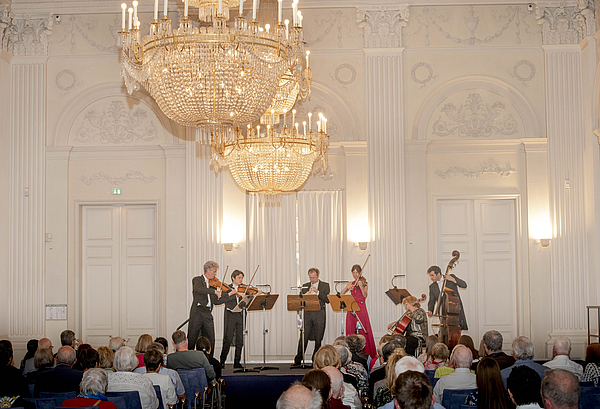
The best things come in small packages: With wonderful stucco works and crystal, chandeliers equipped Max's Joseph hall is for many a small pearl in the residence and forms the perfect frame for classical concerts. Just chamber music friends estimate the intimate character of the space.
Festive concert
Beethoven: Symphony No. 9
Vivaldi: "The Four Seasons": "Autumn" and "Winter"
Residenz-Solisten
Then begins a work that rises in music history like a vast mountain range: Ludwig van Beethoven’s Symphony No. 9.
At first, the sound seems to emerge from nothingness. Mysterious, vibrating tones begin to gather, gradually taking shape – until suddenly the symphony stands before us: monumental, radiant and profoundly human.
In the Scherzo, an irresistible rhythmic force erupts. Sharply accented and driven with breathtaking precision, the music pulses with defiant vitality, as though life itself were stamping out the rhythm. The third movement opens a wide, singing expanse of sound – intimate, sustained and of touching tenderness.
In the finale, the unprecedented occurs. Beethoven searches, touching upon fragments of the previous movements – only to cast them aside. Then a new melody emerges, softly and simply, almost like a folk song: the theme of the “Ode to Joy.” Rising from the depths of the bass, it gathers strength and unfolds into a triumphant vision. In this moment, Beethoven shatters the boundaries of the symphony.
Friedrich Schiller’s vision of brotherhood becomes sound:
“Joy, bright spark of divinity.”
What resounds here is more than music – it is a call to freedom, fraternity and hope.
The Ninth does not end quietly.
It ends like a sunrise in blazing D major – overwhelming, jubilant, as if Beethoven had wrested a promise from the world itself.
A century earlier, Antonio Vivaldi had already demonstrated how evocative music could be with his cycle "The Four Seasons," though he focused more on nature than on philosophy. In "Autumn," the "Red Priest" first has the violins strike up a dance before imitating the exhaustion of revelers after the harvest with gentle, almost floating melodies—a musical intoxication that subsides into a deep sleep. "Winter," by contrast, makes the listener shiver: through sharp staccato and tremolo strings, the chattering of teeth in the cold is imitated with deceptive realism, while the famous Largo describes the cozy warmth of a heated room as the rain taps softly against the window outside. Vivaldi was so convinced of the narrative power of his music that he accompanied his scores with explanatory sonnets, ensuring every musician knew exactly whether they were portraying a hunting dog or a wanderer slipping on the ice.
Master Concert
Vivaldi: „Die vier Jahreszeiten“ – gesamt
Mozart: Eine kleine Nachtmusik
Corelli: Weihnachtskonzert
Händel: Concerto grosso
Pachelbel: Kanon
Residenz-Solisten
The best things come in small packages: With wonderful stucco works and crystal, chandeliers equipped Max's Joseph hall is for many a small pearl in the residence and forms the perfect frame for classical concerts. Just chamber music friends estimate the intimate character of the space.
Classical music in the museum
Vivaldi: The Four Seasons – “Autumn” & “Winter”
Grieg: Peer Gynt – Suite
Pachelbel: Canon
Tchaikovsky: Highlights from The Nutcracker & Swan Lake
Residence-Soloists
Concert Program – From Baroque to Romantic
The Four Seasons – Autumn & Winter – Antonio Vivaldi
Vivaldi’s vivid violin concertos depict the colors and moods of the seasons. In Autumn and Winter, the composer contrasts festive dances, rustic celebrations, and the chill of icy landscapes with virtuosic passages and dynamic orchestral interplay.
Peer Gynt Suite – Edvard Grieg
Grieg’s suite from Henrik Ibsen’s play captures Norwegian landscapes, folk-inspired melodies, and dramatic storytelling. From the lyrical Morning Mood to the lively In the Hall of the Mountain King, the music blends poetic lyricism with rhythmic vitality.
Canon in D – Johann Pachelbel
One of the most famous Baroque pieces, Pachelbel’s canon features three violins in imitative dialogue over a repeating bass line. Its serene harmonies and elegant structure make it a timeless favorite.
Highlights from The Nutcracker & Swan Lake – Pyotr Ilyich Tchaikovsky
Tchaikovsky’s ballet music brings magical storytelling to life, from the sparkling Dance of the Sugar Plum Fairy to the dramatic and lyrical passages of Swan Lake. The orchestration combines brilliant color, rhythmic drive, and memorable melodies, making these works enduring classics of the Romantic repertoire.
Master Concert to the 3rd. sunday of Advent
Vivaldi: Die vier Jahreszeiten “Herbst” & “Winter”
Mozart: Violinkonzert G-Dur - Allegro
Grieg: Peer Gynt – Suite
Corelli: Weihnachtskonzert
Pachelbel: Kanon
Tschaikowski: Highlights aus “Nussknacker” & “Schwanensee”
Residenz-Solisten
The best things come in small packages: With wonderful stucco works and crystal, chandeliers equipped Max's Joseph hall is for many a small pearl in the residence and forms the perfect frame for classical concerts. Just chamber music friends estimate the intimate character of the space.
Master Concert
Vivaldi: “The Four Seasons”: “Autumn” & “Winter”
Vivaldi: Oboe Concerto
Grieg: Peer Gynt Suite
Corelli: Christmas Concerto
Pachelbel: Canon
Tchaikovsky: Highlights from “The Nutcracker” & “Swan Lake”
Residence-Soloists
The best things come in small packages: With wonderful stucco works and crystal, chandeliers equipped Max's Joseph hall is for many a small pearl in the residence and forms the perfect frame for classical concerts. Just chamber music friends estimate the intimate character of the space.
Master concert for the 4th sunday in Advent
Vivaldi: "The Four Seasons" – complete
Corelli: Christmas Concerto
Handel: Concerto Grosso
Pachelbel: Canon
Residence-Soloists
The best things come in small packages: With wonderful stucco works and crystal, chandeliers equipped Max's Joseph hall is for many a small pearl in the residence and forms the perfect frame for classical concerts. Just chamber music friends estimate the intimate character of the space.
Festive Christmas Concert
J.S. Bach: Overture in B minor
J.S. Bach: Brandenburg Concerto No. 5
Vivaldi: "Winter" from "The Four Seasons"
Corelli: Christmas Concerto
Handel: Concerto grosso
Vivaldi: Flute Concerto "La Notte"
Michael Kofler - Flute MPhil, Tun-Han Hu - Cembalo & Residence-Soloists
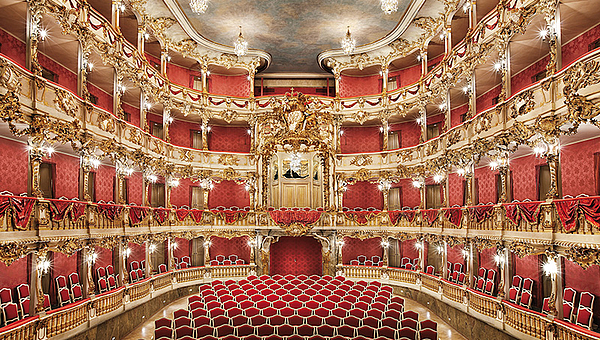
The Cuvilliés Theater is one only of the most beautiful and also one of the most important rococo theaters in Europe. In 1753, the hall, decorated entirely in royal purple and gold, with it‘s 14 boxes on 4 floors under Maximilian III. Joseph will be opened. Well-known operas such as Mozart's “Indomeneo” were premiered here. In 1806, Emperor Napoleon attended the opera “Don Giovanni” on the occasion of the inauguration of Bavaria. The Cuvilliés Theater with its “Style rocaille” is an art-historical work of art.
Experience the Residence Soloists in this unique, magnificent environment with a richness of sound that does credit to the masters of classical music and makes their performance a very special listening pleasure.
The Middle Logde is only available per phone-call under: +49 89 2897 5597.
Due to limited places, wheelcair seats can only booked through +49 89 2897 5597 manually.
