


The Old Court Chapel
Variable program
Every Thursday and every Saturday you can expect a special cultural hallmark in the Munich Residence troughout the year. The Residence Soloists are performing in the Court Chapel (Hofkapelle) The historical atmosphere of the court chapel in which also Mozart was performing concerts lets you get in touch with the music of old times. You will find weekly changing performances with masterpieces ranging from Bach, Vivaldi, Haydn and Mozart.
Please notice: In summertimes the old court chapel is cool and in wintertimes it can be cold! Please wear warm clothes.
The Old Court Chapel
Variable program
Every Saturday you can expect a special cultural hallmark in the Munich Residence troughout the year. The Residence Soloists are performing in the Court Chapel (Hofkapelle) The historical atmosphere of the court chapel in which also Mozart was performing concerts lets you get in touch with the music of old times. You will find weekly changing performances with masterpieces ranging from Bach, Vivaldi, Haydn and Mozart.
Please notice: In summertimes the old court chapel is cool and in wintertimes it can be cold! Please wear warm clothes.

Castle Nymphenburg - Johannissaal
Scarlatti: Sonate K35
Chopin: op. 69 Nr. 2, op. 34 Nr. 3
Mozart: Sonate B-Dur KV 333
Schumann: Waldszenen op. 82
This concert series serves as a tribute to Mozart, who gave a concert with his sister Nannerl in Nymphenburg Palace with Elector Maximilian III when he was seven years old and this went down in history.

Cuvilliés Theatre
Mozart: Overture from Don Giovanni
Beethoven: Symphony No. 5 in C minor “Fate” – Allegro con brio
Beethoven: Piano Concerto No. 4 in G major
Dvořák: From the New World – Suite
Residence Soloists
In the golden shimmer of the Rococo Cuvilliés Theatre, the evening begins with a musical thunderclap. The overture to Don Giovanni by Wolfgang Amadeus Mozart bursts into the hall with those Dantean, shattering chords that foreshadow the ominous appearance of the “Stone Guest,” before plunging into a restless, almost demonic Allegro. In just a few minutes, it captures the entire dramatic spectrum of the opera, balancing tragedy and comedy with remarkable intensity.
Mozart was also a master of working under pressure. Legend has it that he wrote the overture during the night before the premiere in Prague in 1787, while his wife Constanze kept him awake with punch and stories. The copyists received the score only the next morning, and the orchestra had to perform the demanding piece that very evening almost straight from the page.
The first movement of Ludwig van Beethoven’s Fifth Symphony in C minor follows with what is perhaps the most famous musical motif in history: the iconic four-note figure that dominates the entire movement. From this tiny musical cell grows a vast surge of sound, charged with extraordinary tension and energy. The nickname “Fate Symphony” is said to come from Beethoven’s secretary Anton Schindler, who claimed that Beethoven described the opening motif with the words: “Thus fate knocks at the door.” Ironically, the premiere in 1808 was something of a disaster: the audience shivered in the unheated Theater an der Wien, and the orchestra struggled through an exhausting program that lasted nearly four hours.
Quite different in character is Beethoven’s Fourth Piano Concerto in G major, one of the most poetic and introspective works of his output. Instead of beginning with a powerful orchestral statement, the concerto opens quietly and unexpectedly: the piano alone introduces gentle, lyrical chords, as if the music were emerging from a private thought. Only afterwards does the orchestra respond, reversing the traditional relationship between soloist and ensemble. At the premiere Beethoven himself played the solo part, although his hearing was already severely deteriorating; it would be his final appearance as a soloist with orchestra. Contemporary accounts describe how he played with such physical intensity that he knocked the candleholders off the piano during an expansive gesture. Choirboys rushed in to hold the candles, only to be pushed aside again at the next entrance, provoking laughter in the audience. Beethoven, however, reacted angrily: after only a few bars he stopped the orchestra and began the movement again from the start.
The program concludes with music by Antonín Dvořák from his famous Symphony No. 9 “From the New World.” Composed during his time in the United States in the 1890s, the work reflects Dvořák’s fascination with the sounds and musical traditions he encountered there, from African American spirituals to Native American melodies. Yet the symphony also carries a deep sense of homesickness for his native Bohemia. The suite drawn from this symphony highlights some of its most memorable moments: expansive melodies, vibrant rhythms, and the famous Largo with its hauntingly beautiful English horn solo.
Together these works form a concert rich not only in musical brilliance but also in stories: of overnight inspiration, chaotic premieres, and the passionate temperament of some of history’s greatest composers.
The Old Court Chapel
Variable program
Every Thursday and every Saturday you can expect a special cultural hallmark in the Munich Residence troughout the year. The Residence Soloists are performing in the Court Chapel (Hofkapelle) The historical atmosphere of the court chapel in which also Mozart was performing concerts lets you get in touch with the music of old times. You will find weekly changing performances with masterpieces ranging from Bach, Vivaldi, Haydn and Mozart.
Please notice: In summertimes the old court chapel is cool and in wintertimes it can be cold! Please wear warm clothes.
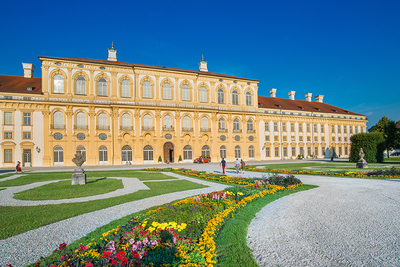
Schleissheim Palace
Verdi: Ouverture from „Nabucco“
Vivaldi: Fluteconcerto
Mozart: Fluteconcerto Re major KV 314
Beethoven: Symphony No. 3 „Eroica“
Residence - Soloists
Concert Program – From Baroque to Romantic
This program takes the audience on a journey through centuries: from Vivaldi’s Baroque virtuosity and Mozart’s Classical elegance to Verdi’s operatic drama and Beethoven’s groundbreaking Romantic vision, offering both historical insight and musical adventure.
Overture to Nabucco – Giuseppe Verdi
Verdi’s overture to Nabucco bursts with drama and intensity, immediately drawing the listener into the world of the biblical story. Nabucco was the opera that first brought Verdi widespread acclaim in 1842, and its overture foreshadows the sweeping emotional contrasts of the full work. Anecdotally, when Verdi conducted early performances, audiences were reportedly so moved by the overture’s grandeur that many stood in silent awe before the first act even began. The work’s heroic gestures and majestic themes set the perfect tone for a program that moves from Baroque elegance to Romantic drama.
Flute Concerto – Antonio Vivaldi
Vivaldi’s flute concerto showcases the brilliance of the Baroque flute, an instrument that was considered both delicate and expressive. His concertos often feature virtuosic passages that push the limits of the performer’s technique. Legend has it that Vivaldi, nicknamed the “Red Priest” for his hair, would sometimes write last-minute passages specifically to challenge his students at the Ospedale della Pietà, where he taught orphaned girls. The interplay between soloist and orchestra in this concerto captures the vibrant energy of Venetian Baroque music, alternating between lyrical melodies and sparkling, rhythmic brilliance.
Flute Concerto in D Major – Wolfgang Amadeus Mozart
Mozart’s flute concerto in D major exemplifies the elegance and clarity of the Classical era. Written in 1778 for the Dutch flutist Ferdinand De Jean, the work features graceful melodies and refined dialogue between soloist and orchestra. An interesting anecdote: Mozart reportedly struggled to compose the concerto while traveling, writing letters to his father expressing frustration over deadlines and the flutist’s “insatiable demands.” Despite these challenges, the concerto radiates effortless charm and wit, combining virtuosic passages with lyrical, song-like themes that continue to captivate audiences today.
Symphony No. 3 – Eroica – Ludwig van Beethoven
Beethoven’s Eroica symphony is a revolutionary work that transformed the symphonic tradition. Originally dedicated to Napoleon Bonaparte, Beethoven famously withdrew the dedication when Napoleon declared himself Emperor, reportedly tearing the dedication page in anger. The symphony’s first movement introduces heroic motifs, dramatic tension, and bold harmonic exploration. The funeral march of the second movement contrasts tragedy with triumph, while the finale bursts with joy, wit, and exuberance. The Eroica represents Beethoven’s belief in music as a vehicle for human heroism and emotional depth, making it a cornerstone of the Romantic symphonic repertoire.

Max-Joseph hall of the Munich Residence
Verdi: Overture from La Forza del Destino
Mozart: Concerto for Flute and Harp – Allegro
Mahler: Symphony No. 5, Adagietto
Debussy: Danse sacrée et danse profane
Bizet: Carmen Fantasy for Flute
Smetana: The Moldau
Offenbach: Can-Can & Barcarole
J. Strauss: The Blue Danube – Waltz
Janine Schöllhorn – Flute, Emilie Jaulmes – Harp & Residenz Soloists
This concert takes the audience on a highly emotional journey through Europe’s opera houses and river landscapes, carried by dramatic fate and elegant dance.
The evening opens with Verdi’s overture to La Forza del Destino. The work begins with three striking opening notes—the famous “Fate motif”—before unfolding the most beautiful melodies from the opera. Anecdote: Verdi was convinced that this opera was cursed. In fact, in several productions, lead performers died on stage or scenery collapsed. The gripping overture is so intense that many conductors today approach it with extra reverence, as if to avoid challenging fate itself.
A moment of pure serenity follows with Mozart’s Concerto for Flute and Harp (Allegro). One of the few Classical works combining these two ethereal instruments, it was commissioned by a French duke and his daughter. Anecdote: Mozart privately mocked the “impossible” pairing, yet he produced a score that sounds so effortlessly light, as if angels themselves had guided his pen.
We experience the deepest Romanticism in Mahler’s Adagietto from his Fifth Symphony. Composed solely for strings and harp, it is one of the most touching musical declarations of love in history. Anecdote: Mahler sent the manuscript to his future wife Alma without a single word; she understood it as a marriage proposal. The piece later gained worldwide fame through the film Death in Venice, but for Mahler, it was not a farewell—it was a glowing promise of eternal love.
The mood shifts to Spanish fire with Bizet’s Carmen Fantasy for flute. Based on Bizet’s opera, the work demands peak virtuosity from the soloist. Today, the fiery rhythms of the Habanera and the Gypsy Song are among the most beloved melodies in the world, here brilliantly transposed for the flute.
We follow the course of the river with Smetana’s The Moldau. From the first trickle of two small streams, the music swells into a mighty river flowing past hunting scenes and a village wedding. Anecdote: When Smetana composed this national epic, he was already completely deaf. He could only hear the roaring of the St. Johann Rapids in his imagination—a testament to extraordinary creative power despite physical adversity.
The grand finale features masters of entertainment. Offenbach first transports us to a gondola in Venice with the dreamy Barcarole, before the notorious Can-Can celebrates Parisian nightlife. Anecdote: When it premiered, the Can-Can was considered so scandalous and indecent that the police inspected dance halls to ensure dancers’ legs did not rise too high.
The Old Court Chapel
Variable program
Every Saturday you can expect a special cultural hallmark in the Munich Residence troughout the year. The Residence Soloists are performing in the Court Chapel (Hofkapelle) The historical atmosphere of the court chapel in which also Mozart was performing concerts lets you get in touch with the music of old times. You will find weekly changing performances with masterpieces ranging from Bach, Vivaldi, Haydn and Mozart.
Please notice: In summertimes the old court chapel is cool and in wintertimes it can be cold! Please wear warm clothes.
Castle Nymphenburg - Johannissaal
Mozart: Klaviersonate Nr. 14, KV 457 - 1. und 2. Satz
Bach: Chaconne in d-Moll, BWV 1004
Scriabin: Klaviersonate Nr. 3 f#-Moll, op. 23
Liszt: Après une lecture du Dante: Fantasia quasi Sonata (Dante-Sonate)
Residenz-Solist: Chanyeon Jung - Klavier
This concert series serves as a tribute to Mozart, who gave a concert with his sister Nannerl in Nymphenburg Palace with Elector Maximilian III when he was seven years old and this went down in history.
The Old Court Chapel
Variable program
Every Thursday and every Saturday you can expect a special cultural hallmark in the Munich Residence troughout the year. The Residence Soloists are performing in the Court Chapel (Hofkapelle) The historical atmosphere of the court chapel in which also Mozart was performing concerts lets you get in touch with the music of old times. You will find weekly changing performances with masterpieces ranging from Bach, Vivaldi, Haydn and Mozart.
Please notice: In summertimes the old court chapel is cool and in wintertimes it can be cold! Please wear warm clothes.
