


Master Concert
Vivaldi: „Die vier Jahreszeiten“ – gesamt
Mozart: Eine kleine Nachtmusik
Corelli: Weihnachtskonzert
Händel: Concerto grosso
Pachelbel: Kanon
Simon Zhu - Violine & Residenz-Solisten
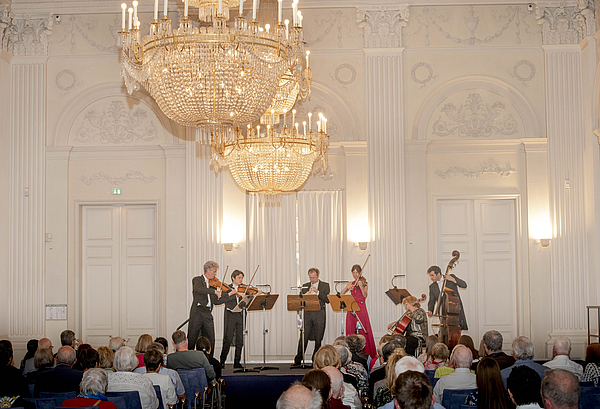
The best things come in small packages: With wonderful stucco works and crystal, chandeliers equipped Max's Joseph hall is for many a small pearl in the residence and forms the perfect frame for classical concerts. Just chamber music friends estimate the intimate character of the space.
Festive concert
Beethoven: Symphony No. 9
Vivaldi: "The Four Seasons": "Autumn" and "Winter"
Residenz-Solisten
Then begins a work that rises in music history like a vast mountain range: Ludwig van Beethoven’s Symphony No. 9.
At first, the sound seems to emerge from nothingness. Mysterious, vibrating tones begin to gather, gradually taking shape – until suddenly the symphony stands before us: monumental, radiant and profoundly human.
In the Scherzo, an irresistible rhythmic force erupts. Sharply accented and driven with breathtaking precision, the music pulses with defiant vitality, as though life itself were stamping out the rhythm. The third movement opens a wide, singing expanse of sound – intimate, sustained and of touching tenderness.
In the finale, the unprecedented occurs. Beethoven searches, touching upon fragments of the previous movements – only to cast them aside. Then a new melody emerges, softly and simply, almost like a folk song: the theme of the “Ode to Joy.” Rising from the depths of the bass, it gathers strength and unfolds into a triumphant vision. In this moment, Beethoven shatters the boundaries of the symphony.
Friedrich Schiller’s vision of brotherhood becomes sound:
“Joy, bright spark of divinity.”
What resounds here is more than music – it is a call to freedom, fraternity and hope.
The Ninth does not end quietly.
It ends like a sunrise in blazing D major – overwhelming, jubilant, as if Beethoven had wrested a promise from the world itself.
A century earlier, Antonio Vivaldi had already demonstrated how evocative music could be with his cycle "The Four Seasons," though he focused more on nature than on philosophy. In "Autumn," the "Red Priest" first has the violins strike up a dance before imitating the exhaustion of revelers after the harvest with gentle, almost floating melodies—a musical intoxication that subsides into a deep sleep. "Winter," by contrast, makes the listener shiver: through sharp staccato and tremolo strings, the chattering of teeth in the cold is imitated with deceptive realism, while the famous Largo describes the cozy warmth of a heated room as the rain taps softly against the window outside. Vivaldi was so convinced of the narrative power of his music that he accompanied his scores with explanatory sonnets, ensuring every musician knew exactly whether they were portraying a hunting dog or a wanderer slipping on the ice.
Master Concert
Vivaldi: „Die vier Jahreszeiten“ – gesamt
Mozart: Eine kleine Nachtmusik
Corelli: Weihnachtskonzert
Händel: Concerto grosso
Pachelbel: Kanon
Residenz-Solisten
A Musical Winter Evening Filled with Splendour
Vivaldi’s vivid “Four Seasons”, Mozart’s effortless elegance and the festive sounds of Corelli, Handel and Pachelbel come together in a concert evening filled with virtuosity, warmth and the magic of the Christmas season.
In the magnificent Max-Joseph-Saal, beneath glittering royal chandeliers and surrounded by candlelight, this becomes an experience of rare beauty: great music in an exquisite setting where the magic of Christmas seems to glow with a life of its own.
Vivaldi: “The Four Seasons”
Few works bring nature to life with such immediacy and vivid colour as Vivaldi’s “The Four Seasons.” Across the four violin concertos unfolds a fascinating panorama of birdsong and spring breezes, summer heat and approaching thunderstorms, the joy of the harvest and the quiet stillness of winter.
Virtuosic passages, radiant colours and unforgettable melodies make this masterpiece an ever-fresh experience – alive with movement, poetry and the unmistakable spirit of Italy.
Mozart: Eine kleine Nachtmusik
With its graceful elegance and crystalline clarity, Mozart’s “Eine kleine Nachtmusik” is one of those rare works that enchants from the very first note. Light-footed, charming and seemingly effortless in its perfection, it creates an atmosphere of refined sociability and classical sophistication.
A timeless Mozart moment – full of lightness, charm and joie de vivre.
Corelli: Christmas Concerto
With Corelli’s Christmas Concerto, the special atmosphere of Advent takes centre stage. Warm string sonorities, delicate melodic lines and festive elegance combine to create music of intimate beauty.
Traditionally associated with the Christmas season, this beloved work evokes the quiet anticipation and warmth that make Advent so enchanting – festive, graceful and deeply atmospheric.
Handel: Concerto Grosso
Handel’s Concerto Grosso embodies the splendour of the Baroque at its finest. In the lively interplay between soloists and ensemble, a captivating musical dialogue unfolds, filled with virtuosity and festive brilliance.
Elegant melodic lines, powerful accents and Handel’s unmistakable grandeur give the work a majestic presence – music that reveals its full magnificence in a setting of such splendour.
Pachelbel: Canon
Pachelbel’s Canon touches the heart through its simplicity and timeless beauty. Above its gently unfolding harmonic foundation, the melody gradually blossoms, building layer by layer into a warm and almost weightless tapestry of sound.
Timelessly elegant and deeply moving, the Canon offers a moment of quiet reflection – bringing the concert evening to a serene and beautiful close.
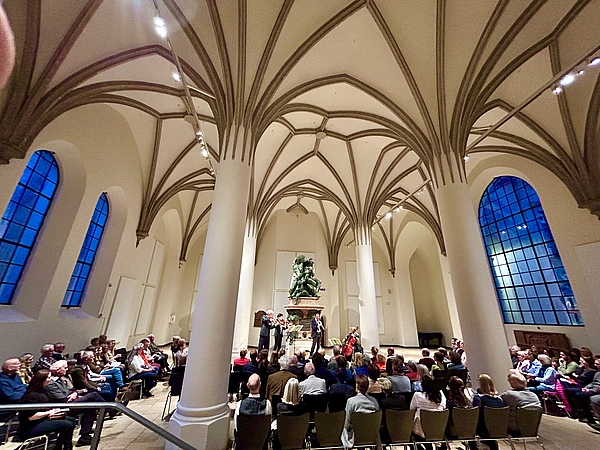
Classical music in the museum
Vivaldi: The Four Seasons – “Autumn” & “Winter”
Grieg: Peer Gynt – Suite
Pachelbel: Canon
Tchaikovsky: Highlights from The Nutcracker & Swan Lake
Residence-Soloists
Concert Program – From Baroque to Romantic
The Four Seasons – Autumn & Winter – Antonio Vivaldi
Vivaldi’s vivid violin concertos depict the colors and moods of the seasons. In Autumn and Winter, the composer contrasts festive dances, rustic celebrations, and the chill of icy landscapes with virtuosic passages and dynamic orchestral interplay.
Peer Gynt Suite – Edvard Grieg
Grieg’s suite from Henrik Ibsen’s play captures Norwegian landscapes, folk-inspired melodies, and dramatic storytelling. From the lyrical Morning Mood to the lively In the Hall of the Mountain King, the music blends poetic lyricism with rhythmic vitality.
Canon in D – Johann Pachelbel
One of the most famous Baroque pieces, Pachelbel’s canon features three violins in imitative dialogue over a repeating bass line. Its serene harmonies and elegant structure make it a timeless favorite.
Highlights from The Nutcracker & Swan Lake – Pyotr Ilyich Tchaikovsky
Tchaikovsky’s ballet music brings magical storytelling to life, from the sparkling Dance of the Sugar Plum Fairy to the dramatic and lyrical passages of Swan Lake. The orchestration combines brilliant color, rhythmic drive, and memorable melodies, making these works enduring classics of the Romantic repertoire.
Master Concert in the Max-Joseph Hall with candlelight
Vivaldi: Die vier Jahreszeiten “Herbst” & “Winter”
Mozart: Violinkonzert G-Dur - Allegro
Grieg: Peer Gynt – Suite
Corelli: Weihnachtskonzert
Pachelbel: Kanon
Tschaikowski: Highlights aus “Nussknacker” & “Schwanensee”
Residenz-Solisten
An Evening of Winter Magic
From Vivaldi’s evocative “Autumn & Winter” through Mozart and Grieg to Corelli’s Christmas Concerto and Tchaikovsky’s enchanting ballet worlds, this programme brings together beloved masterpieces in an evening filled with warmth, virtuosity and winter magic.
In the magnificent Max-Joseph-Saal, beneath glittering royal chandeliers and surrounded by candlelight, the music becomes an experience of exceptional atmosphere – classical masterpieces in a royal setting, capturing the magic of the winter season in sound and light.
Vivaldi: “The Four Seasons” – Autumn & Winter
With Vivaldi’s “Autumn” and “Winter”, the changing seasons come vividly to life. “Autumn” evokes harvest celebrations, dancing and the joy of abundance, while “Winter” conjures icy landscapes, swirling snowstorms and moments of intimate warmth. Virtuosic writing and vivid musical imagery make Vivaldi’s masterpiece an ever-fascinating portrait of nature.
Mozart: Violin Concerto in G major – Allegro
Mozart’s Allegro from the Violin Concerto in G major captivates with graceful elegance, effortless lightness and the refined beauty of the Classical style. The virtuosic violin engages in a sparkling dialogue with the orchestra, creating music filled with charm, brilliance and joie de vivre.
Grieg: Peer Gynt – Suite
A journey into a poetic Nordic soundscape: Grieg’s “Peer Gynt” combines enchanting moods with unforgettable melodies. Gentle morning light, mysterious landscapes and dramatic episodes unfold like scenes from a musical fairy tale – atmospheric, richly coloured and filled with Nordic poetry.
Corelli: Christmas Concerto
With Corelli’s “Christmas Concerto”, the festive season begins. Warm strings, delicate melodic lines and refined Baroque elegance combine to create music of intimate beauty. The work carries the quiet anticipation of Advent and brings a wonderful warmth and festive glow to the evening.
Pachelbel: Canon
Pachelbel’s Canon unfolds its beauty with remarkable serenity and timeless elegance. Above its gently flowing harmonic foundation, the melody gradually blossoms, creating a warm and almost weightless tapestry of sound. A moment of stillness and reflection – filled with harmony, warmth and emotional depth.
Tchaikovsky: Highlights from “The Nutcracker” & “Swan Lake”
For the grand finale, the enchanting world of Pyotr Ilyich Tchaikovsky comes alive. The most beautiful melodies from “The Nutcracker” and “Swan Lake” transport you into a world of sparkling enchantment, romantic longing and graceful dance.
From the famous Dance of the Sugar Plum Fairy to the unforgettable melodies of Swan Lake, the music builds to a radiant finale – full of poetry, emotion and festive splendour.
Master Concert
Vivaldi: “The Four Seasons”: “Autumn” & “Winter”
Vivaldi: Oboe Concerto
Grieg: Peer Gynt Suite
Corelli: Christmas Concerto
Pachelbel: Canon
Tchaikovsky: Highlights from “The Nutcracker” & “Swan Lake”
Residence-Soloists
Winter Musical Dreams
Vivaldi’s vivid “Autumn & Winter”, his virtuosic Oboe Concerto, Grieg’s poetic Peer Gynt, Corelli’s festive Christmas Concerto and Pachelbel’s timeless Canon lead into the enchanting world of Tchaikovsky.
In the magnificent Max-Joseph-Saal, beneath glittering royal chandeliers and surrounded by the warm glow of candlelight, these masterpieces create an evening filled with winter poetry, festive warmth and musical enchantment.
Great masterpieces, royal splendour and the special magic of the Christmas season – an evening to dream, savour and enjoy.
Vivaldi: “The Four Seasons” – Autumn & Winter
Vivaldi’s “Autumn” and “Winter” transport you into a fascinating world of vivid colours and contrasting moods. “Autumn” evokes joyful celebrations, the abundance of the harvest and spirited dancing, while “Winter” reveals a very different side of nature – icy clarity, swirling snowstorms and moments of intimate warmth. With virtuosic brilliance and vivid musical imagery, Vivaldi brings the changing seasons vividly to life.
Vivaldi: Oboe Concerto
Elegance and virtuosic brilliance characterise Vivaldi’s Oboe Concerto. The warm, distinctive voice of the oboe enters into a lively dialogue with the strings, creating music of extraordinary lightness and Italian joie de vivre. Graceful melodies, dancing rhythms and sparkling passages make this concerto a particularly charming highlight of the evening.
Grieg: “Peer Gynt” – Suite
Grieg’s “Peer Gynt” opens the door to a poetic Nordic soundscape. Gentle morning moods, mysterious landscapes and passionate scenes unfold one after another, creating a musical tale filled with imagination. Unforgettable melodies merge with richly atmospheric colours in music of remarkable emotional power.
Corelli: Christmas Concerto
With Corelli’s “Christmas Concerto”, the enchantment of Advent enters the concert hall. Warm string sonorities and finely shaped melodic lines create music that is both festive and deeply intimate. Filled with quiet anticipation and timeless beauty, this beloved work captures the very essence of the Christmas season.
Pachelbel: Canon
Pachelbel’s famous Canon touches the heart through its simplicity and profound beauty. Above its gently flowing harmonic foundation, the melody gradually unfolds and grows into a warm, almost weightless tapestry of sound. A moment of stillness and reflection – elegant, intimate and timeless.
Tchaikovsky: Highlights from “The Nutcracker” & “Swan Lake”
For the radiant finale, the enchanting world of Tchaikovsky comes to life. The most beautiful melodies from “The Nutcracker” and “Swan Lake” transport you into a world of sparkling enchantment, romantic longing and graceful dance.
The fairy-tale magic of “The Nutcracker”, with its enchanting dances, meets the romantic poetry of “Swan Lake.” Beloved melodies, exquisite orchestral colours and profound emotion come together in a finale filled with magic, elegance and festive splendour.
Master concert for the 4th sunday in Advent
Vivaldi: "The Four Seasons" – complete
Corelli: Christmas Concerto
Handel: Concerto Grosso
Pachelbel: Canon
Residence-Soloists
A Musical Winter Evening Filled with Splendour
Vivaldi’s vivid “Four Seasons”, Mozart’s effortless elegance and the festive sounds of Corelli, Handel and Pachelbel come together in a concert evening filled with virtuosity, warmth and the magic of the Christmas season.
In the magnificent Max-Joseph-Saal, beneath glittering royal chandeliers and surrounded by candlelight, this becomes an experience of rare beauty: great music in an exquisite setting where the magic of Christmas seems to glow with a life of its own.
Vivaldi: “The Four Seasons”
Few works bring nature to life with such immediacy and vivid colour as Vivaldi’s “The Four Seasons.” Across the four violin concertos unfolds a fascinating panorama of birdsong and spring breezes, summer heat and approaching thunderstorms, the joy of the harvest and the quiet stillness of winter.
Virtuosic passages, radiant colours and unforgettable melodies make this masterpiece an ever-fresh experience – alive with movement, poetry and the unmistakable spirit of Italy.
Corelli: Christmas Concerto
With Corelli’s Christmas Concerto, the special atmosphere of Advent takes centre stage. Warm string sonorities, delicate melodic lines and festive elegance combine to create music of intimate beauty.
Traditionally associated with the Christmas season, this beloved work evokes the quiet anticipation and warmth that make Advent so enchanting – festive, graceful and deeply atmospheric.
Handel: Concerto Grosso
Handel’s Concerto Grosso embodies the splendour of the Baroque at its finest. In the lively interplay between soloists and ensemble, a captivating musical dialogue unfolds, filled with virtuosity and festive brilliance.
Elegant melodic lines, powerful accents and Handel’s unmistakable grandeur give the work a majestic presence – music that reveals its full magnificence in a setting of such splendour.
Pachelbel: Canon
Pachelbel’s Canon touches the heart through its simplicity and timeless beauty. Above its gently unfolding harmonic foundation, the melody gradually blossoms, building layer by layer into a warm and almost weightless tapestry of sound.
Timelessly elegant and deeply moving, the Canon offers a moment of quiet reflection – bringing the concert evening to a serene and beautiful close.
Festive Christmas Concert
J.S. Bach: Overture in B minor
J.S. Bach: Brandenburg Concerto No. 5
Vivaldi: "Winter" from "The Four Seasons"
Corelli: Christmas Concerto
Handel: Concerto grosso
Vivaldi: Flute Concerto "La Notte"
Michael Kofler - Flute MPhil, Rodrigo Belío - Cembalo & Residence-Soloists
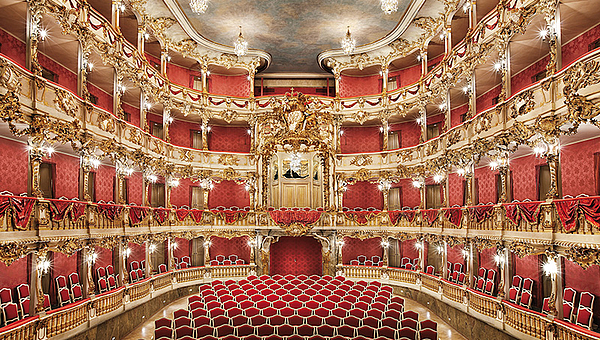
The Cuvilliés Theater is one only of the most beautiful and also one of the most important rococo theaters in Europe. In 1753, the hall, decorated entirely in royal purple and gold, with it‘s 14 boxes on 4 floors under Maximilian III. Joseph will be opened. Well-known operas such as Mozart's “Indomeneo” were premiered here. In 1806, Emperor Napoleon attended the opera “Don Giovanni” on the occasion of the inauguration of Bavaria. The Cuvilliés Theater with its “Style rocaille” is an art-historical work of art.
Experience the Residence Soloists in this unique, magnificent environment with a richness of sound that does credit to the masters of classical music and makes their performance a very special listening pleasure.
The Middle Logde is only available per phone-call under: +49 89 2897 5597.
Due to limited places, wheelcair seats can only booked through +49 89 2897 5597 manually.
Master concert for Christmas
Vivaldi: "Winter"
Vivaldi: Violin Concerto "L'estro Armonico"
Corelli: Christmas Concerto
Handel: Concerto Grosso
Vivaldi: Violin Concerto "La Stravaganza"
Pachelbel: Canon
Mozart: “A small night music”
Residence-Soloists
The best things come in small packages: With wonderful stucco works and crystal, chandeliers equipped Max's Joseph hall is for many a small pearl in the residence and forms the perfect frame for classical concerts. Just chamber music friends estimate the intimate character of the space.
Master concert for Christmas
Vivaldi: "Winter"
Vivaldi: Violin Concerto "L'estro armonico"
Corelli: Christmas Concerto
Händel: Concerto grosso
Vivaldi: Violin Concerto "La stravaganza"
Pachelbel: Canon
Mozart: "A small night music"
Residence-Soloists
The best things come in small packages: With wonderful stucco works and crystal, chandeliers equipped Max's Joseph hall is for many a small pearl in the residence and forms the perfect frame for classical concerts. Just chamber music friends estimate the intimate character of the space.
